
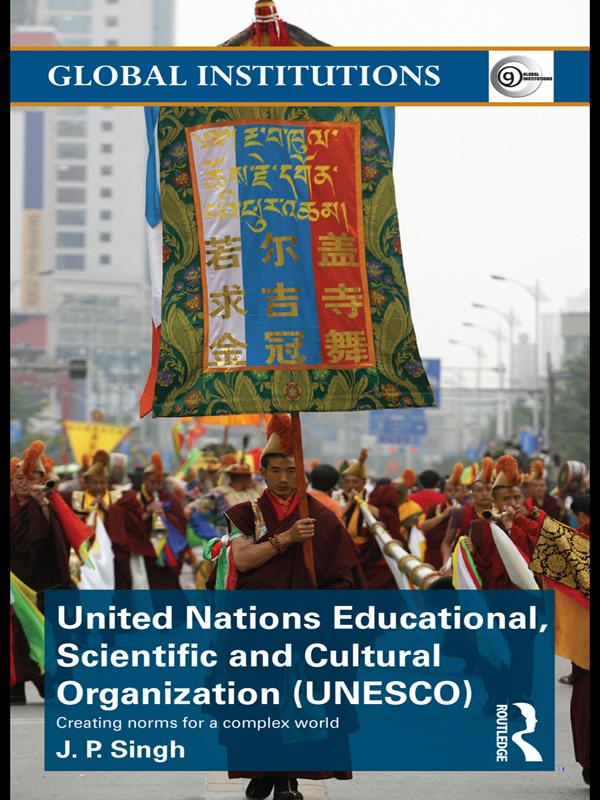
This book traces the history of UNESCO from its foundational idealism to its current stature as the preeminent international organization for science, education, and culture, building a well rounded understanding of this important organization.
The book:
- provides an overview of the organization and its institutional architecture in the context of its humanistic idealism
- details the subsequent challenges UNESCO faced through cold war and power politics, global dependence and interdependence, and the rise of identity and culture in global politics
- analyses the functioning of UNESCO administration, finance, and its various constituencies including the secretariat, member-states, and civil society
- explores the major controversies and issues underlying the initiatives in education, sciences, culture and communication
- examines the current agenda and future challenges through three major issues in UNESCO: Education or All, digital divide issues, and norms on cultural diversity
- assesses the role of UNESCO in making norms in complex world of multiple actors and intersecting issue-areas.
Reflecting on UNESCO’s vision, its everyday practices, and future challenges; this work is an essential resource for students and scholars of international relations and international organizations.
Betaal eenvoudig met kaart, Klarna, Apple Pay of Google Pay. Niet tevreden? Je hebt altijd 14 dagen bedenktijd. Lees meer in onze voorwaarden. Heb je vragen, mail ons dan via hello@memmo.org.
Memmo maakt studeren makkelijker – waar je ook bent ter wereld. Wij brengen je cursusboeken en slimme studietools samen op één plek: samenvattingen, quizzen, podcasts en flashcards. En Ted, je studievriend die antwoord geeft op alles wat je je afvraagt. Meer dan 50.000 studenten studeren hier al – gebouwd om je sneller te laten leren en minder stress te geven.