
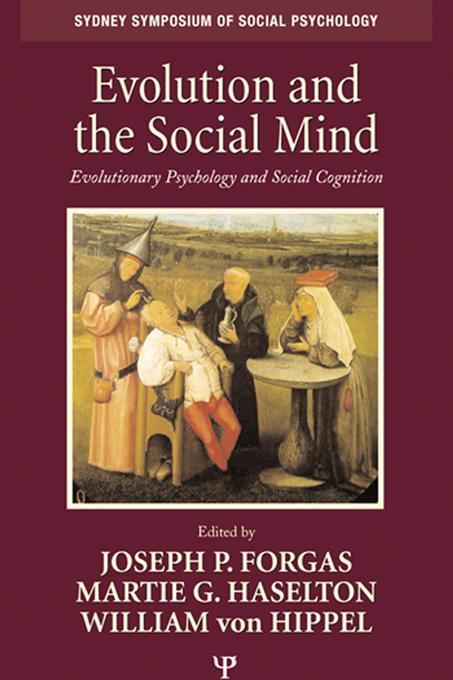
This book seeks to combine the study of human social cognition - the way we think, decide, plan and analyze social situations - with an evolutionary framework that considers these activities in light of evolutionary adaptations for solving problems of survival faced by our ancestors over thousands of generations. The chapters report recent research and theories illustrating how evolutionary principles can shed new light on the subtle and often subconscious ways that cognitive mechanisms guide peoples’ thoughts, memories, judgments, attitudes and behaviors in social life.
The contributors to this volume, who are leading researchers in their fields, seek answers to such intriguing questions as: how can evolutionary principles help to explain human beliefs, attitudes, judgments, prejudice, and group preferences? Are there benefits to behaving unpredictably? Why are prototypical faces more attractive than atypical ones? How do men and women think about, and select potential mates? What are the adaptive functions of negative affect? What are the evolutionary influences on the way people think about and respond to social exclusion and ostracism?
Evolution and the Social Mind offers a highly integrated and representative coverage of this emerging field, and is suitable as a textbook in advanced courses dealing with social cognition and evolutionary psychology.
Betaal eenvoudig met kaart, Klarna, Apple Pay of Google Pay. Niet tevreden? Je hebt altijd 14 dagen bedenktijd. Lees meer in onze voorwaarden. Heb je vragen, mail ons dan via hello@memmo.org.
Memmo maakt studeren makkelijker – waar je ook bent ter wereld. Wij brengen je cursusboeken en slimme studietools samen op één plek: samenvattingen, quizzen, podcasts en flashcards. En Ted, je studievriend die antwoord geeft op alles wat je je afvraagt. Meer dan 50.000 studenten studeren hier al – gebouwd om je sneller te laten leren en minder stress te geven.