
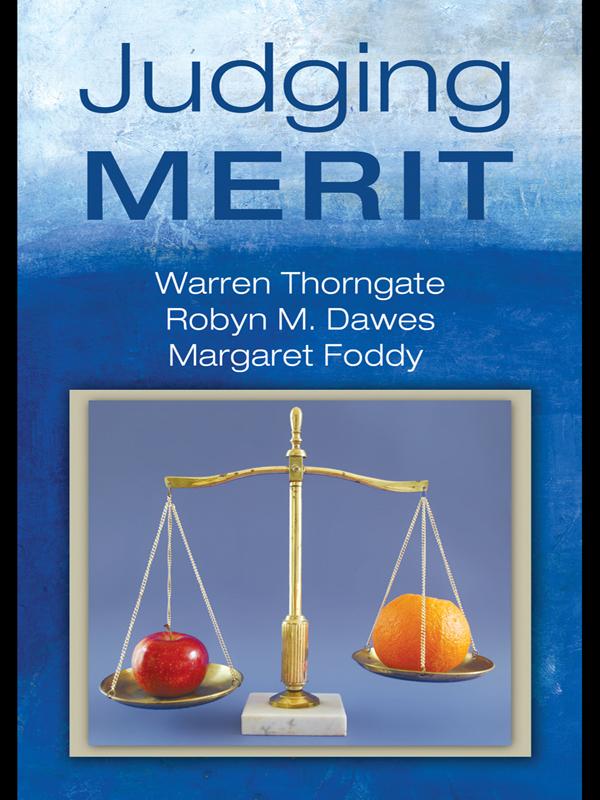
Merit-based tests and contests have become popular methods for allocating rewards – from trophies to contracts, jobs to grants, admissions to licenses. With origins in jurisprudence, methods of rewarding merit seem fairer than those rewarding political or social connections, bribery, aggression, status, or wealth. Because of this, merit-based competitions are well-suited to the societal belief that people should be rewarded for what they know or do, and not for who they know or are; however, judging merit is rarely an easy task – it is prone to a variety of biases and errors. Small biases and errors, especially in large competitions, can make large differences in who or what is rewarded. It is important, then, to learn how to spot flaws in procedures for judging merit and to correct them when possible.
Based on over 20 years of theory and research in human judgment, decision making and social psychology, this unique book brings together for the first time what is known about the processes and problems of judging merit and their consequences. It also provides practical suggestions for increasing the fairness of merit-based competitions, and examines the future and limits of these competitions in society.
Betaal eenvoudig met kaart, Klarna, Apple Pay of Google Pay. Niet tevreden? Je hebt altijd 14 dagen bedenktijd. Lees meer in onze voorwaarden. Heb je vragen, mail ons dan via hello@memmo.org.
Memmo maakt studeren makkelijker – waar je ook bent ter wereld. Wij brengen je cursusboeken en slimme studietools samen op één plek: samenvattingen, quizzen, podcasts en flashcards. En Ted, je studievriend die antwoord geeft op alles wat je je afvraagt. Meer dan 50.000 studenten studeren hier al – gebouwd om je sneller te laten leren en minder stress te geven.