
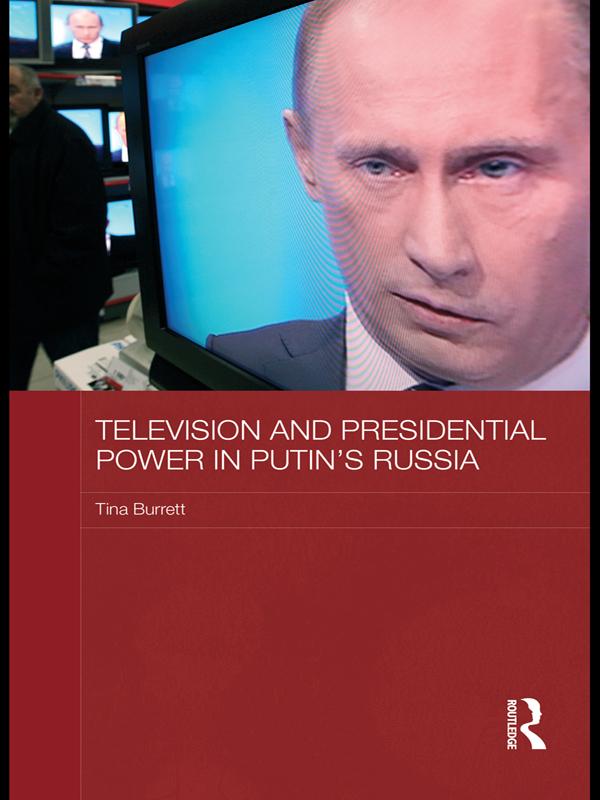
As a new president takes power in Russia, this book provides an analysis of the changing relationship between control of Russian television media and presidential power during the tenure of President Vladimir Putin. It argues that the conflicts within Russia’s political and economic elites, and President Putin’s attempts to rebuild the Russian state after its fragmentation during the Yeltsin administration, are the most significant causes of changes in Russian media. Tina Burrett demonstrates that President Putin sought to increase state control over television as part of a larger programme aimed at strengthening the power of the state and the position of the presidency at its apex, and that such control over the media was instrumental to the success of the president’s wider systemic changes that have redefined the Russian polity.
The book also highlights the ways in which oligarchic media owners in Russia used television for their own political purposes, and that media manipulation was not the exclusive preserve of the Kremlin, but a common pattern of behaviour in elite struggles in the post-Soviet era. Basing its analysis predominately on interviews with key players in the Moscow media and political elites, and on secondary sources drawn from the Russian and Western media, the book examines broad themes that have been the subject of constant media interest, and have relevance beyond the confines of Russian politics.
Betaal eenvoudig met kaart, Klarna, Apple Pay of Google Pay. Niet tevreden? Je hebt altijd 14 dagen bedenktijd. Lees meer in onze voorwaarden. Heb je vragen, mail ons dan via hello@memmo.org.
Memmo maakt studeren makkelijker – waar je ook bent ter wereld. Wij brengen je cursusboeken en slimme studietools samen op één plek: samenvattingen, quizzen, podcasts en flashcards. En Ted, je studievriend die antwoord geeft op alles wat je je afvraagt. Meer dan 50.000 studenten studeren hier al – gebouwd om je sneller te laten leren en minder stress te geven.