
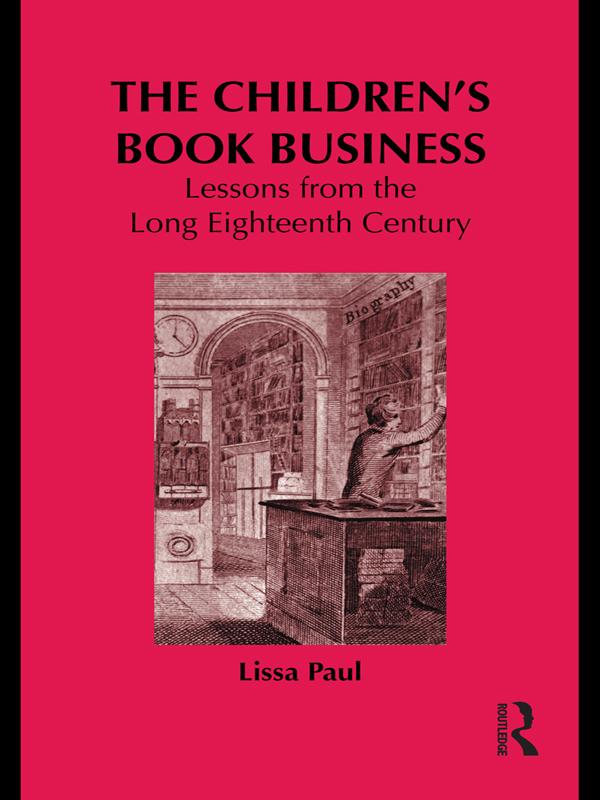
In The Children’s Book Business, Lissa Paul constructs a new kind of book biography. By focusing on Eliza Fenwick’s1805 product-placement novel, Visits to the Juvenile Library, in the context of Marjorie Moon’s 1990 bibliography, Benjamin Tabart’s Juvenile Library, Paul explains how twenty-first century cultural sensibilities are informed by late eighteenth-century attitudes towards children, reading, knowledge, and publishing. The thinking, knowing children of the Enlightenment, she argues, are models for present day technologically-connected, socially-conscious children; the increasingly obsolete images of Romantic innocent and ignorant children are bracketed between the two periods.
By drawing on recent scholarship in several fields including book history, cultural studies, and educational theory, The Children’s Book Business provides a detailed historical picture of the landscape of some of the trade practices of early publishers, and explains how they developed in concert with the progressive pedagogies of several female authors, including Eliza Fenwick, Mary Wollstonecraft, Anna Barbauld, Maria Edgeworth, and Ann and Jane Taylor. Paul’s revisionist reading of the history of children’s literature will be of interest to scholars working in eighteenth-century studies, book history, childhood studies, cultural studies, educational history, and children’s literature.
Betaal eenvoudig met kaart, Klarna, Apple Pay of Google Pay. Niet tevreden? Je hebt altijd 14 dagen bedenktijd. Lees meer in onze voorwaarden. Heb je vragen, mail ons dan via hello@memmo.org.
Memmo maakt studeren makkelijker – waar je ook bent ter wereld. Wij brengen je cursusboeken en slimme studietools samen op één plek: samenvattingen, quizzen, podcasts en flashcards. En Ted, je studievriend die antwoord geeft op alles wat je je afvraagt. Meer dan 50.000 studenten studeren hier al – gebouwd om je sneller te laten leren en minder stress te geven.