
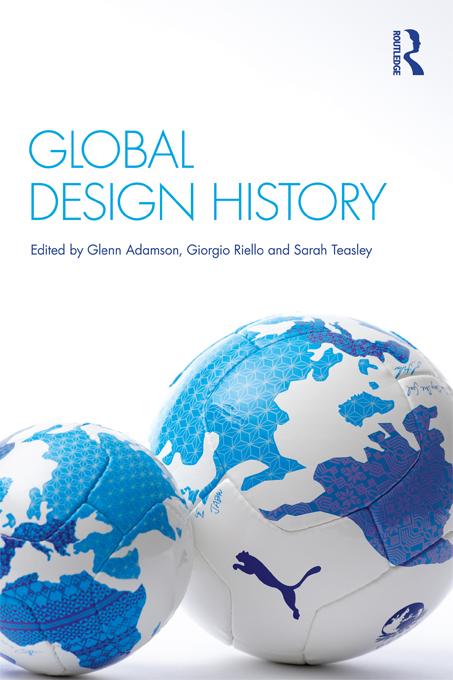
Globalism is often discussed using abstract terms, such as ‘networks’ or ‘flows’ and usually in relation to recent history. Global Design History moves us past this limited view of globalism, broadening our sense of this key term in history and theory.
Individual chapters focus our attention on objects, and the stories they can tell us about cultural interactions on a global scale. They place these concrete things into contexts, such as trade, empire, mediation, and various forms of design practice. Among the varied topics included are:
- the global underpinnings of Renaissance material culture
- the trade of Indian cottons in the eighteenth-century
- the Japanese tea ceremony as a case of ‘import substitution’
- German design in the context of empire
- handcrafted modernist furniture in Turkey
- Australian fashions employing ‘ethnic’ motifs
- an experimental UK-Ghanaian design partnership
- Chinese social networking websites
- the international circulation of contemporary architects.
Featuring work from leading design historians, each chapter is paired with a ‘response’, designed to expand the discussion and test the methodologies on offer. An extensive bibliography and resource guide will also aid further research, providing students with a user friendly model for approaches to global design.
Global Design History will be useful for upper-level undergraduate and postgraduate students, academics and researchers in design history and art history, and related subjects such as anthropology, craft studies and cultural geography.
Betaal eenvoudig met kaart, Klarna, Apple Pay of Google Pay. Niet tevreden? Je hebt altijd 14 dagen bedenktijd. Lees meer in onze voorwaarden. Heb je vragen, mail ons dan via hello@memmo.org.
Memmo maakt studeren makkelijker – waar je ook bent ter wereld. Wij brengen je cursusboeken en slimme studietools samen op één plek: samenvattingen, quizzen, podcasts en flashcards. En Ted, je studievriend die antwoord geeft op alles wat je je afvraagt. Meer dan 50.000 studenten studeren hier al – gebouwd om je sneller te laten leren en minder stress te geven.