
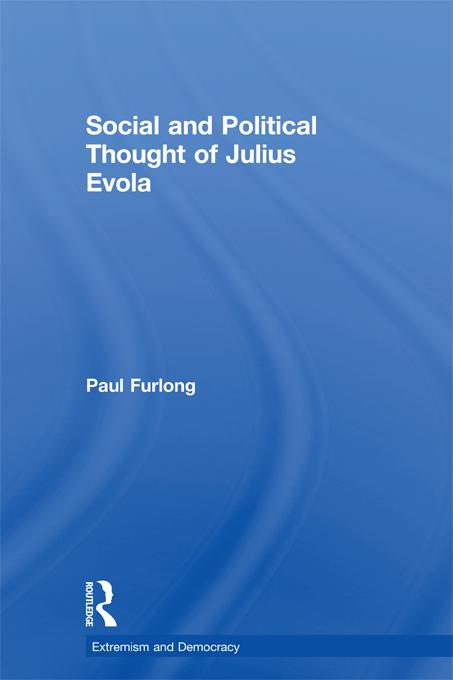
Julius Evola’s writing covered a vast range of subjects, from a distinctive and categorical ideological outlook and has been extremely influential on a significant number of extreme right thinkers, activists and organisations. This book is the first full length study in English to present his political thought to a wider audience, beyond that of his followers and sympathisers, and to bring into the open the study of a neglected strand of contemporary Western thought, that of traditionalism.
Evola deserves more attention because he is an influential writer. His following comes from an important if largely ignored political movement: activists and commentators whose political positions are, like his, avowedly traditionalist, authoritarian, anti-modern, anti-democratic and anti-liberal. With honourable exceptions, contemporary academic study tends to treat these groups as a minority within a minority, a sub-species of Fascism, from whom they are held to derive their ideas and their support. This work seeks to bring out more clearly the complexity of Evola’s post-war strategy, so as to explain how he can be adopted both by the neo-fascist groups committed to violence, and by groups such as the European New Right whose approach is more aimed at influence from within liberal democracies. Furlong also recognises the relevance of Evola’s ideas to anti-globalisation arguments, including a re-examination of his arguments for detachment and spontaneism (apolitia).
Betaal eenvoudig met kaart, Klarna, Apple Pay of Google Pay. Niet tevreden? Je hebt altijd 14 dagen bedenktijd. Lees meer in onze voorwaarden. Heb je vragen, mail ons dan via hello@memmo.org.
Memmo maakt studeren makkelijker – waar je ook bent ter wereld. Wij brengen je cursusboeken en slimme studietools samen op één plek: samenvattingen, quizzen, podcasts en flashcards. En Ted, je studievriend die antwoord geeft op alles wat je je afvraagt. Meer dan 50.000 studenten studeren hier al – gebouwd om je sneller te laten leren en minder stress te geven.