
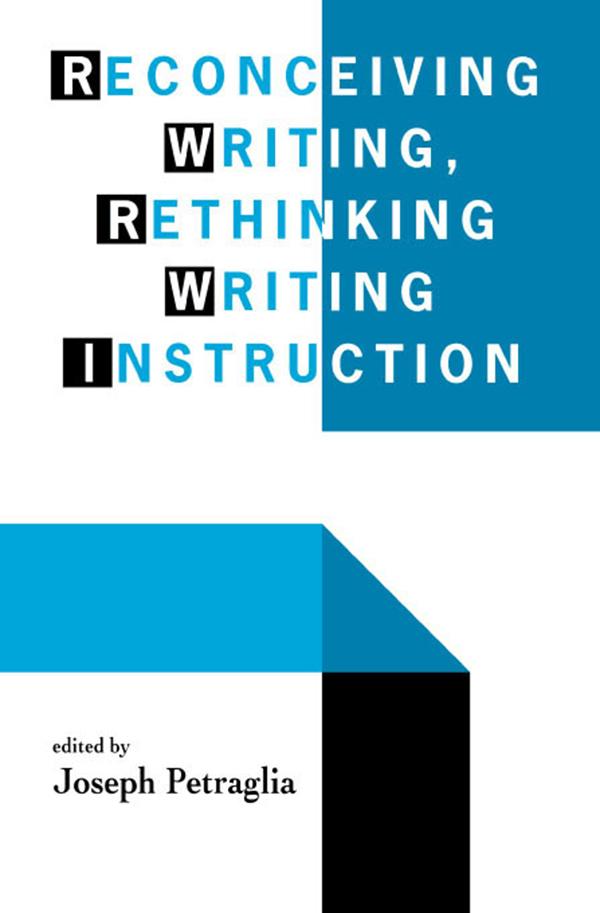
To a degree unknown in practically any other discipline, the pedagogical space afforded composition is the institutional engine that makes possible all other theoretical and research efforts in the field of rhetoric and writing. But composition has recently come under attack from many within the field as fundamentally misguided. Some of these critics have been labelled "New Abolitionists" for their insistence that compulsory first-year writing should be abandoned. Not limiting itself to first-year writing courses, this book extends and modifies calls for abolition by taking a closer look at current theoretical and empirical understandings of what contributors call "general writing skills instruction" (GWSI): the curriculum which an overwhelming majority of writing instructors is paid to teach, that practically every composition textbook is written to support, and the instruction for which English departments are given resources to deliver.
The vulnerability of GWSI is hardly a secret among writing professionals and its intellectual fragility has been felt for years and manifested in several ways:
* in persistently low status of composition as a study both within and outside of English departments;
* in professional journal articles and conference presentations that are growing both in theoretical sophistication and irrelevance to the composition classroom; and
* in the rhetoric and writing field's ever-increasing attention to nontraditional sites of writing behavior.
But, to date, there has been relatively little concerted discussion within the writing field that focuses specifically on the fundamentally awkward relationship of writing theory and writing instruction.
This volume is the first to explicitly focus on the gap in the theory and practice that has emerged as a result of the field's growing professionalization. The essays anthologized offer critiques of GWSI in light of the discipline's growing understanding of the contexts for writing and their rhetorical nature. Writing from a wide range of cognitivist, critical-theoretical, historical, linguistic and philosophical perspectives, contributors call into serious question basic tenets of contemporary writing instruction and provide a forum for articulating a sort of zeitgeist that seems to permeate many writing conferences, but which has, until recently, not found a voice or a name.
Betaal eenvoudig met kaart, Klarna, Apple Pay of Google Pay. Niet tevreden? Je hebt altijd 14 dagen bedenktijd. Lees meer in onze voorwaarden. Heb je vragen, mail ons dan via hello@memmo.org.
Memmo maakt studeren makkelijker – waar je ook bent ter wereld. Wij brengen je cursusboeken en slimme studietools samen op één plek: samenvattingen, quizzen, podcasts en flashcards. En Ted, je studievriend die antwoord geeft op alles wat je je afvraagt. Meer dan 50.000 studenten studeren hier al – gebouwd om je sneller te laten leren en minder stress te geven.