
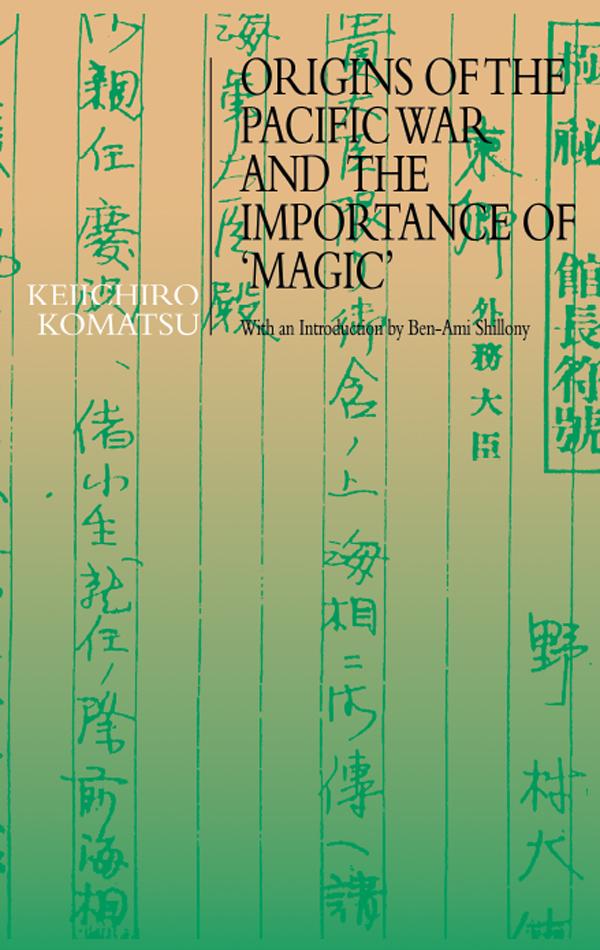
'Magic' was the name given to the American decoding of the secret Japanese codes used in diplomatic communications before and during the Pacific War of 1941-45. This important new work, presenting a Japanese perspective, argues for the first time that in the final phase of the eight months of US-Japan talks leading to the attack on Pearl Harbor, serious mistranslations in Magic were a significant factor in the cumulative effect of mutual misunderstandings which grew between the two sides over a longer period.
In spite of the number of historians who take the opposite point of view, the author argues that the efforts made by the participants on both sides to achieve a successful outcome and avert military conflict, or at least delay the outbreak of the war until the following March (1942), might have been much closer to achieving success than generally believed.
The mistranslations of Magic which led to the crisis in 1941 were influenced by misunderstanding and misperception, and the persistence of stereotypes and 'images' among the parties involved. The study of these kinds of phenomena has been an important part of the growth of the discipline of international relations since the Second World War.
Betaal eenvoudig met kaart, Klarna, Apple Pay of Google Pay. Niet tevreden? Je hebt altijd 14 dagen bedenktijd. Lees meer in onze voorwaarden. Heb je vragen, mail ons dan via hello@memmo.org.
Memmo maakt studeren makkelijker – waar je ook bent ter wereld. Wij brengen je cursusboeken en slimme studietools samen op één plek: samenvattingen, quizzen, podcasts en flashcards. En Ted, je studievriend die antwoord geeft op alles wat je je afvraagt. Meer dan 50.000 studenten studeren hier al – gebouwd om je sneller te laten leren en minder stress te geven.
Misschien vind je dit ook leuk
Koop het boek0