
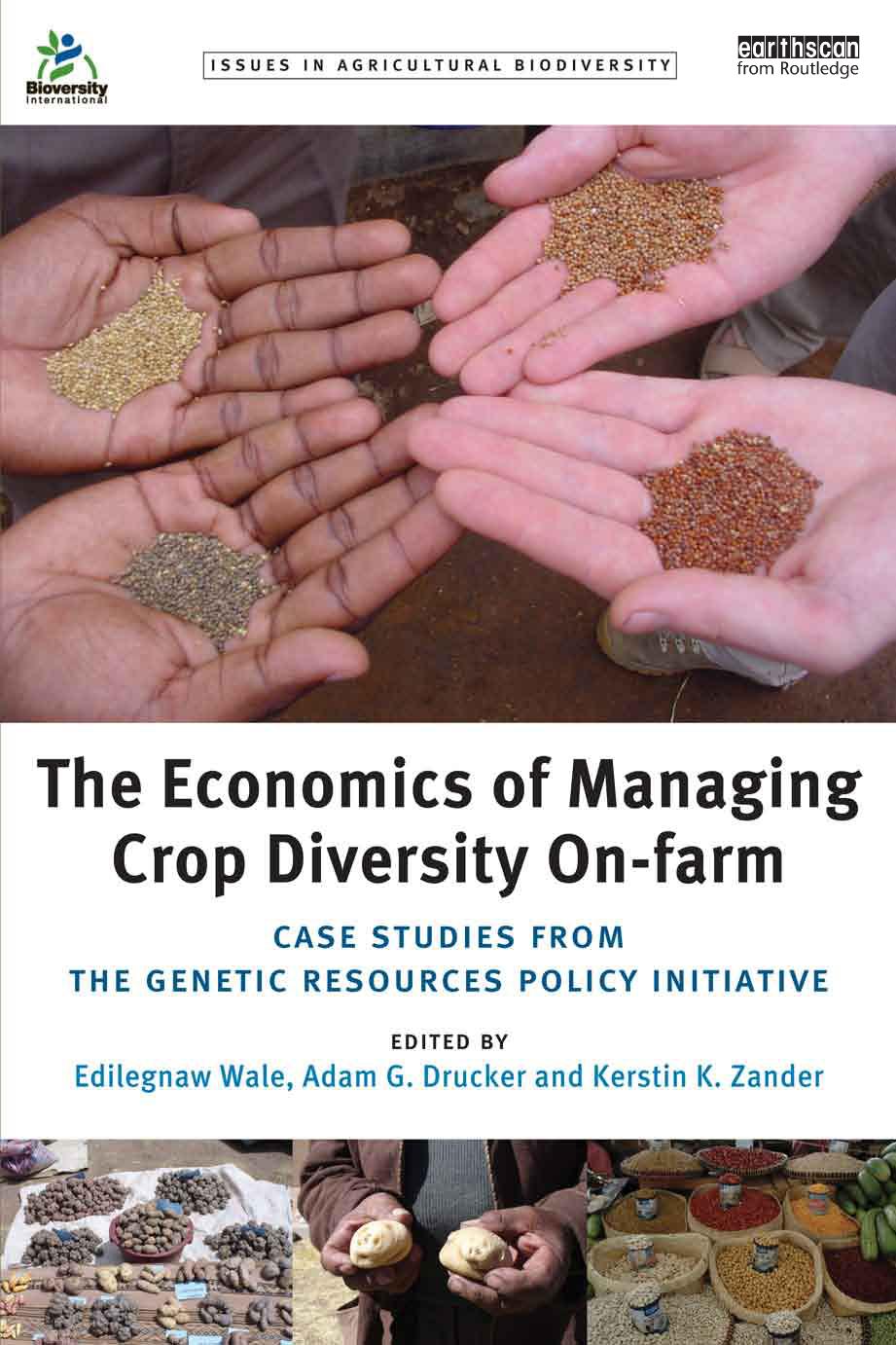
The purpose of this book is to assess a variety of economic issues as they relate to agro-biodiversity and show how addressing these issues can assist in agro-biodiversity policy-making. This is illustrated using empirical data from some of the countries (Ethiopia, Nepal and Zambia) which are part of the Genetic Resources Policy Initiative. The empirical chapters apply the relevant economic methods, including regression analysis, choice experiments, hedonic pricing, contingent valuation and farm business income analysis.
The authors discuss the economics of managing crop diversity on-farm in the context of crop variety attribute preferences, farmers' perception of agro-biodiversity loss, and value addition and marketing of the products of traditional crop varieties. The case studies include detailed analysis of traditional varieties of groundnut, maize, rice, sorghum, and teff. The results are relevant not only to GRPI countries but also to other countries concerned with the sustainable utilization of these resources. Overall, the studies illustrate how genetic resources issues can be integrated into rural development interventions.
Betaal eenvoudig met kaart, Klarna, Apple Pay of Google Pay. Niet tevreden? Je hebt altijd 14 dagen bedenktijd. Lees meer in onze voorwaarden. Heb je vragen, mail ons dan via hello@memmo.org.
Memmo maakt studeren makkelijker – waar je ook bent ter wereld. Wij brengen je cursusboeken en slimme studietools samen op één plek: samenvattingen, quizzen, podcasts en flashcards. En Ted, je studievriend die antwoord geeft op alles wat je je afvraagt. Meer dan 50.000 studenten studeren hier al – gebouwd om je sneller te laten leren en minder stress te geven.