
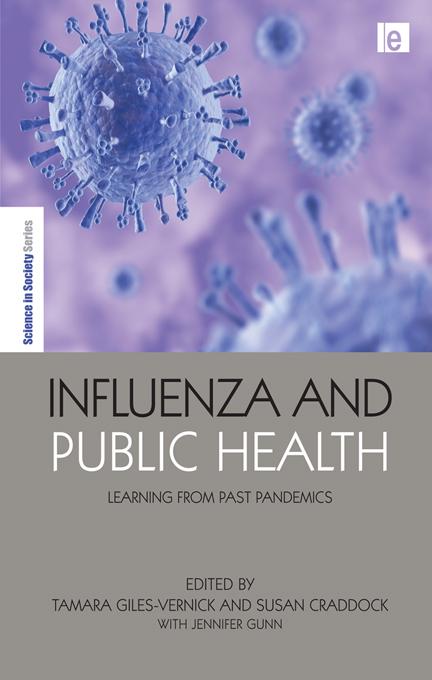
Major influenza pandemics pose a constant threat. As evidenced by recent H5N1 avian flu and novel H1N1, influenza outbreaks can come in close succession, yet differ in their transmission and impact. With accelerated levels of commercial and population mobility, new forms of flu virus can also spread across the globe with unprecedented speed. Responding quickly and adequately to each outbreak becomes imperative on the part of governments and global public health organizations, but the difficulties of doing so are legion. One tool for pandemic planning is analysis of responses to past pandemics that provide insight into productive ways forward.
This book investigates past influenza pandemics in light of today's, so as to afford critical insights into possible transmission patterns, experiences, mistakes, and interventions. It explores several pandemics over the past century, from the infamous 1918 Spanish Influenza, the avian flu epidemic of 2003, and the novel H1N1 pandemic of 2009, to lesser-known outbreaks such as the 1889-90 influenza pandemic and the Hong Kong Flu of 1968. Contributors to the volume examine cases from a wide range of disciplines, including history, sociology, epidemiology, virology, geography, and public health, identifying patterns that cut across pandemics in order to guide contemporary responses to infectious outbreaks.
Betaal eenvoudig met kaart, Klarna, Apple Pay of Google Pay. Niet tevreden? Je hebt altijd 14 dagen bedenktijd. Lees meer in onze voorwaarden. Heb je vragen, mail ons dan via hello@memmo.org.
Memmo maakt studeren makkelijker – waar je ook bent ter wereld. Wij brengen je cursusboeken en slimme studietools samen op één plek: samenvattingen, quizzen, podcasts en flashcards. En Ted, je studievriend die antwoord geeft op alles wat je je afvraagt. Meer dan 50.000 studenten studeren hier al – gebouwd om je sneller te laten leren en minder stress te geven.