
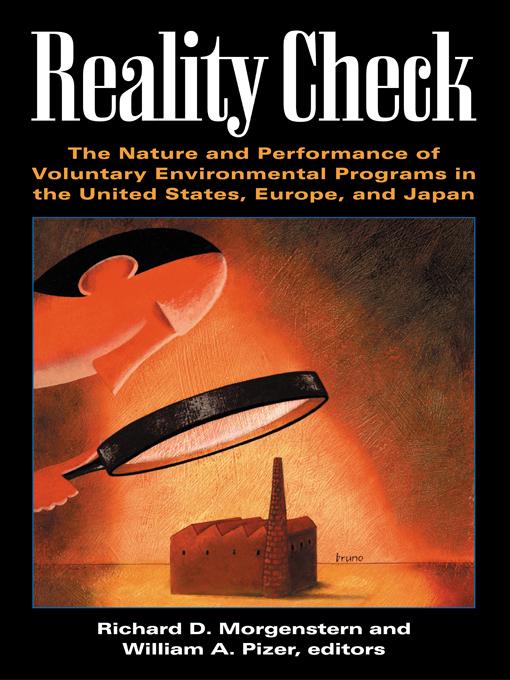
Since the early 1990s, voluntary programs have played an increasingly prominent role in environmental management in the U.S. and other industrialized countries. Programs have attempted to address problems ranging from climate change and energy efficiency, to more localized air and water pollution problems. But do they work? Despite a growing theoretical literature, there is limited empirical evidence on their success or the situations most conducive to the approaches. Even less is known about their cost-effectiveness. Getting credible answers is important. Research to date has been largely limited to individual programs. This innovative book seeks to clarify what is known by looking at a range of program types, including different approaches adopted in different nations. The focus is on assessing actual performance via seven case studies, including the U.S. Climate Wise program, the U.S. EPA's 33/50 program on toxic chemicals, the U.K. Climate Change Agreements, and the Keidanren Voluntary Action Plan in Japan. The central goals of Reality Check are understanding outcomes and, more specifically, the relationship between outcomes and design. By including in-depth analyses by experts from the U.S., Europe, and Japan, the book advances scholarship and provides practical information for the future design of voluntary programs to stakeholders and policymakers on all sides of the Atlantic and Pacific.
Betaal eenvoudig met kaart, Klarna, Apple Pay of Google Pay. Niet tevreden? Je hebt altijd 14 dagen bedenktijd. Lees meer in onze voorwaarden. Heb je vragen, mail ons dan via hello@memmo.org.
Memmo maakt studeren makkelijker – waar je ook bent ter wereld. Wij brengen je cursusboeken en slimme studietools samen op één plek: samenvattingen, quizzen, podcasts en flashcards. En Ted, je studievriend die antwoord geeft op alles wat je je afvraagt. Meer dan 50.000 studenten studeren hier al – gebouwd om je sneller te laten leren en minder stress te geven.
Misschien vind je dit ook leuk
Koop het boek0