
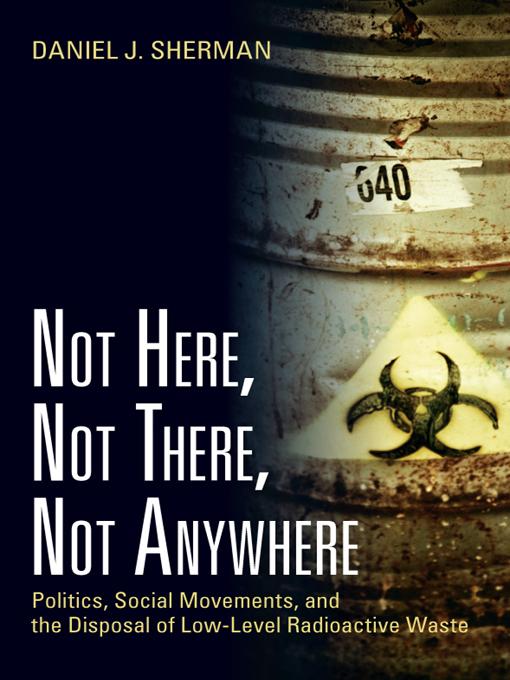
In 1979, provoked by the Three Mile Island nuclear accident, governors of states hosting disposal facilities for low-level radioactive waste (LLRW) refused to accept additional shipments. The resulting shortage of disposal sites for wastes spurred Congress to devolve responsibility for establishing new, geographically diffuse LLRW disposal sites to states and regional compacts, with siting authorities often employing socio-economic and political data to target communities that would give little resistance to their plans.
The communities, however, were far from compliant, organizing nearly 1000 opposition events that ended up blocking the implementation of any new disposal sites. Sherman provides comprehensive coverage of this opposition, testing hypotheses regarding movement mobilization and opposition strategy by analyzing the frequency and disruptive qualities of activism. In the process, he bridges applied policy questions about hazardous waste disposal with broader questions about the dynamics of social movements and the intergovernmental politics of policy implementation. The issues raised in this book are sure to be renewed as interest grows in nuclear power and the disposal of the resulting waste remains uncertain.
Betaal eenvoudig met kaart, Klarna, Apple Pay of Google Pay. Niet tevreden? Je hebt altijd 14 dagen bedenktijd. Lees meer in onze voorwaarden. Heb je vragen, mail ons dan via hello@memmo.org.
Memmo maakt studeren makkelijker – waar je ook bent ter wereld. Wij brengen je cursusboeken en slimme studietools samen op één plek: samenvattingen, quizzen, podcasts en flashcards. En Ted, je studievriend die antwoord geeft op alles wat je je afvraagt. Meer dan 50.000 studenten studeren hier al – gebouwd om je sneller te laten leren en minder stress te geven.