
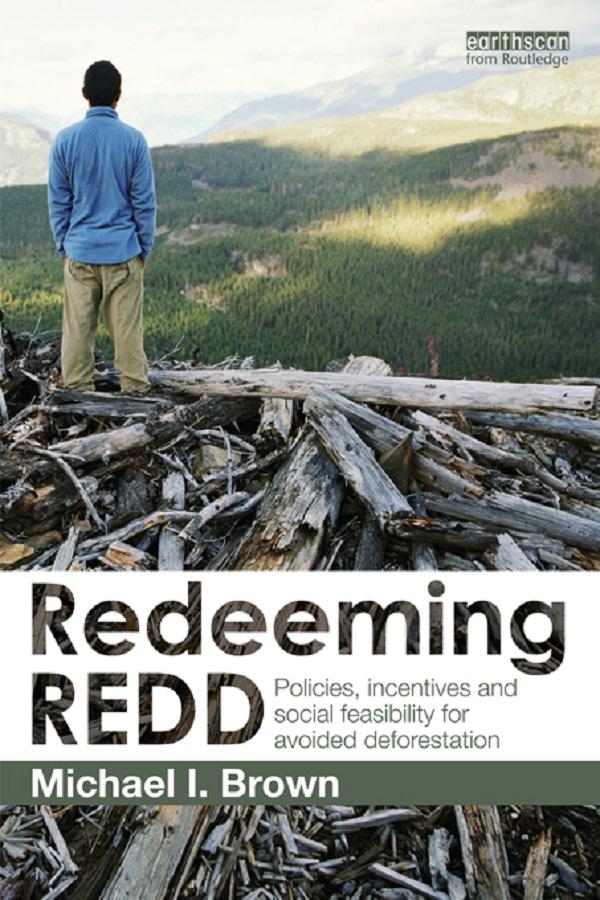
It is now well accepted that deforestation is a key source of greenhouse gas emissions and of climate change, with forests representing major sinks for carbon. As a result, public and private initiatives for reducing emissions from deforestation and forest degradation (REDD) have been widely endorsed by policy-makers. A key issue is the feasibility of carbon trading or other incentives to encourage land-owners and indigenous people, particularly in developing tropical countries, to conserve forests, rather than to cut them down for agricultural or other development purposes.
This book presents a major critique of the aims and policies of REDD as currently structured, particularly in terms of their social feasibility. It is shown how the claims to be able to reduce greenhouse gas emissions as well as enhance people's livelihoods and biodiversity conservation are unrealistic. There is a naive assumption that technical or economic fixes are sufficient for success. However, the social and governance aspects of REDD, and its enhanced version known as REDD+, are shown to be implausible. Instead to enhance REDD's prospects, the author provides a roadmap for developing a new social contract that puts people first.
Betaal eenvoudig met kaart, Klarna, Apple Pay of Google Pay. Niet tevreden? Je hebt altijd 14 dagen bedenktijd. Lees meer in onze voorwaarden. Heb je vragen, mail ons dan via hello@memmo.org.
Memmo maakt studeren makkelijker – waar je ook bent ter wereld. Wij brengen je cursusboeken en slimme studietools samen op één plek: samenvattingen, quizzen, podcasts en flashcards. En Ted, je studievriend die antwoord geeft op alles wat je je afvraagt. Meer dan 50.000 studenten studeren hier al – gebouwd om je sneller te laten leren en minder stress te geven.