
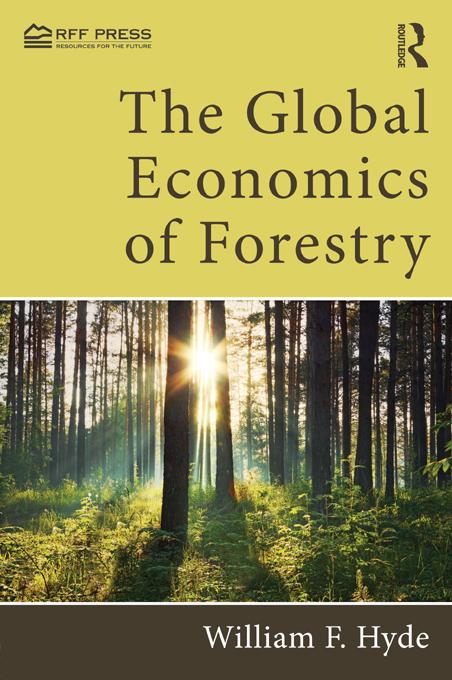
This book traces the economic and biological pattern of forest development from initial settlement and harvest activity at the natural forest frontier to modern industrial forest plantations. It builds from diagrams describing three discrete stages of forest development, and then discusses the management and policy implications associated with each, supporting its observations with examples and data from six continents and from both developed and developing countries. It shows that characteristic distinctions between the three stages make forestry unusual in natural resource management and that effective policy requires different, even contrasting, decisions at each stage.
William F. Hyde’s comprehensive discussion covers a wide range of issues, including the impacts of both specific forest policies and broader macroeconomic policies, the unique requirements of current issues such as global warming, biodiversity and tourism, and the complexities of the different forest products industries. Concluding chapters review the roles of the newer institutional landowners, of smaller private and farm landowners, and of public agencies. This highly-original volume reaches far beyond forest economics; it explains what forestry can do for regional development and environmental conservation and what policies designed for other sectors and the macro-economy can do for forestry.
Betaal eenvoudig met kaart, Klarna, Apple Pay of Google Pay. Niet tevreden? Je hebt altijd 14 dagen bedenktijd. Lees meer in onze voorwaarden. Heb je vragen, mail ons dan via hello@memmo.org.
Memmo maakt studeren makkelijker – waar je ook bent ter wereld. Wij brengen je cursusboeken en slimme studietools samen op één plek: samenvattingen, quizzen, podcasts en flashcards. En Ted, je studievriend die antwoord geeft op alles wat je je afvraagt. Meer dan 50.000 studenten studeren hier al – gebouwd om je sneller te laten leren en minder stress te geven.