
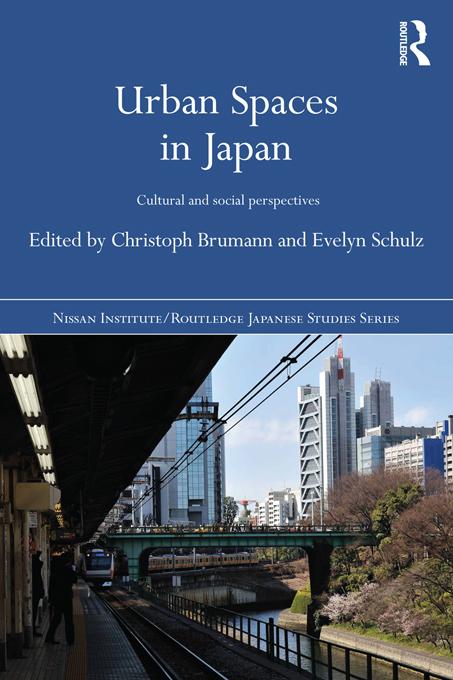
Urban Spaces in Japan explores the workings of power, money and the public interest in the planning and design of Japanese space. Through a set of vivid case studies of well-known Japanese cities including Tokyo, Kobe, and Kyoto, this book examines the potential of civil society in contemporary planning debates. Further, it addresses the implications of Japan's biggest social problem – the demographic decline – for Japanese cities, and demonstrates the serious challenges and exciting possibilities that result from the impending end of Japan's urban growth.
Presenting a synthetic approach that reflects both the physical aspects and the social significance of urban spaces, this book scrutinizes the precise patterns of urban expansion and shrinkage. In doing so, it also summarizes current theories of public space, urban space, and the body in space which are relevant to both Japan and the wider international debate.
With detailed case studies and more general reflections from a broad range of disciplines, this collection of essays demonstrates the value of cross-disciplinary cooperation. As such, it is of interest to students and scholars of geography and urban planning as well as history, anthropology and cultural studies.
Betaal eenvoudig met kaart, Klarna, Apple Pay of Google Pay. Niet tevreden? Je hebt altijd 14 dagen bedenktijd. Lees meer in onze voorwaarden. Heb je vragen, mail ons dan via hello@memmo.org.
Memmo maakt studeren makkelijker – waar je ook bent ter wereld. Wij brengen je cursusboeken en slimme studietools samen op één plek: samenvattingen, quizzen, podcasts en flashcards. En Ted, je studievriend die antwoord geeft op alles wat je je afvraagt. Meer dan 50.000 studenten studeren hier al – gebouwd om je sneller te laten leren en minder stress te geven.