
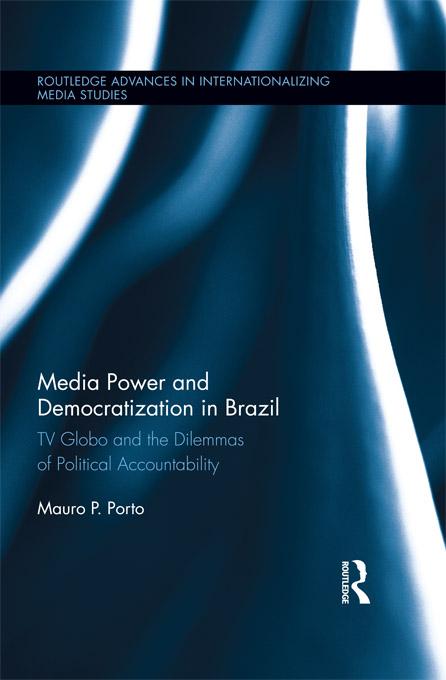
In this book, Porto analyzes the role of TV Globo in the democratization of Brazil. TV Globo, one of the world's largest media conglomerates, has a dominant position in Brazil's communications landscape. It also exports telenovelas to more than 130 countries and has established joint ventures with transnational media conglomerates. Beginning in the mid-1990s, TV Globo began a process of "opening," replacing its authoritarian model of journalism with a more independent reporting style. Representations of Brazil in prime time telenovelas have also shifted. Given this shift, Porto considers some of the following questions:
•What explains these changes in Brazil's most powerful media company?
•How are they related to processes of political and social democratization?
•How did TV Globo's opening affect Brazil's emerging democracy, especially in terms of the quality of political accountability mechanisms?
Porto uses the Brazilian case of TV Globo to analyze the larger links between democratization, civil society mobilization, and media change in transitional societies.
Betaal eenvoudig met kaart, Klarna, Apple Pay of Google Pay. Niet tevreden? Je hebt altijd 14 dagen bedenktijd. Lees meer in onze voorwaarden. Heb je vragen, mail ons dan via hello@memmo.org.
Memmo maakt studeren makkelijker – waar je ook bent ter wereld. Wij brengen je cursusboeken en slimme studietools samen op één plek: samenvattingen, quizzen, podcasts en flashcards. En Ted, je studievriend die antwoord geeft op alles wat je je afvraagt. Meer dan 50.000 studenten studeren hier al – gebouwd om je sneller te laten leren en minder stress te geven.