
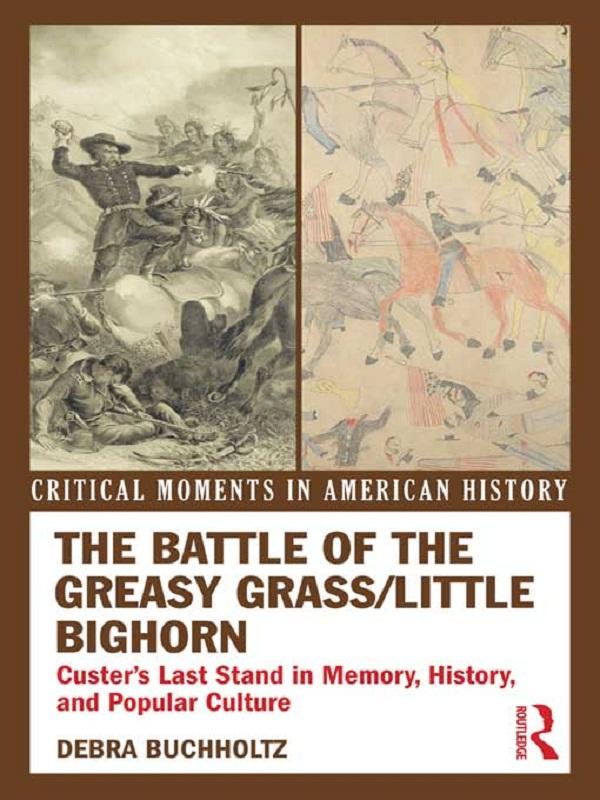
In June of 1876, the U.S. government’s plan to pressure the Lakota and Cheyenne people onto reservations came to a dramatic and violent end with a battle that would become enshrined in American memory. In the eyes of many Americans at the time, the Battle of Little Bighorn represented a symbolic struggle between the civilized and the savage. Known as the Battle of the Greasy Grass to the Lakota, the Battle of Little Bighorn to the people who suppressed them, and as Custer’s Last Stand in the annals of popular culture, the event continues to captivate students of American history.
In The Battle of Little Bighorn, Debra Buchholtz narrates the history of the battle and critically examines the legacy it has left. Through government documents, newspaper articles, and eyewitness accounts, Buchholtz situates the material and symbolic impact of the battle at the time. Using popular film and cultural references, she investigates the ways in which the wake of the event continues to shape the way students understand indigenous peoples, the Wild West, and the history of America.
Betaal eenvoudig met kaart, Klarna, Apple Pay of Google Pay. Niet tevreden? Je hebt altijd 14 dagen bedenktijd. Lees meer in onze voorwaarden. Heb je vragen, mail ons dan via hello@memmo.org.
Memmo maakt studeren makkelijker – waar je ook bent ter wereld. Wij brengen je cursusboeken en slimme studietools samen op één plek: samenvattingen, quizzen, podcasts en flashcards. En Ted, je studievriend die antwoord geeft op alles wat je je afvraagt. Meer dan 50.000 studenten studeren hier al – gebouwd om je sneller te laten leren en minder stress te geven.