
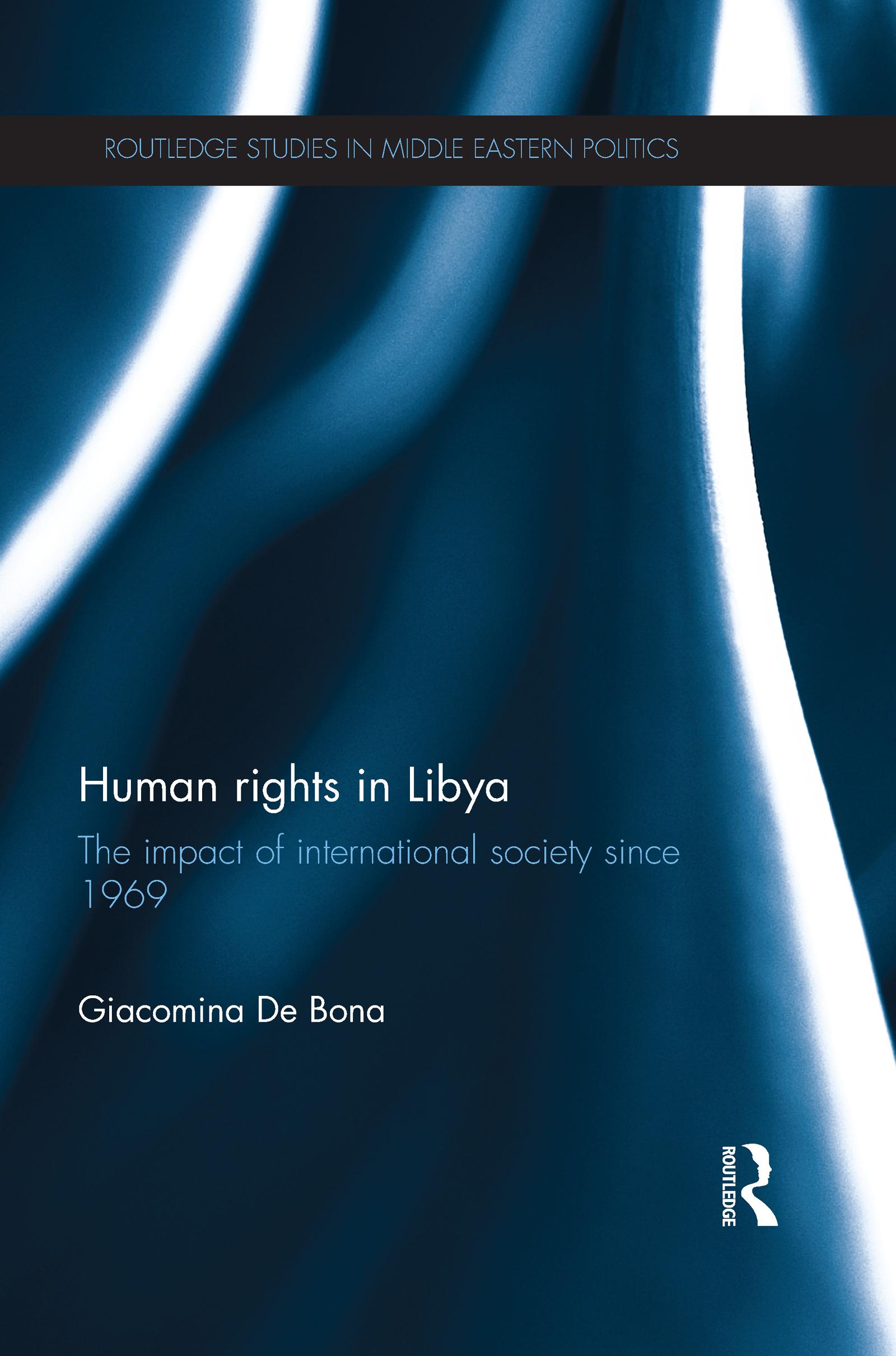
Since the end of the Cold War a democratic wave has swept through large parts of the world, propagating liberal values and giving impetus to the case for human rights in an international society. To date however, the promotion of human rights has presented a mixed account with some countries lagging behind others in terms of their observance. In an effort to account for these differences, this book analyzes the relationship between norms and the social construction of international society, and examines how human rights are promoted in that context.
Focussing on Libya as a case study, Giacomina De Bona criticises the neo-realist approach by demonstrating the impact of international society on the advancement of human rights. Libya has related to the international environment in different ways over time, ranging from isolation to reconciliation and regime change, making it a particularly interesting example.
This book is of particular relevance in light of the recent Arab Spring and raises the question as to whether the coercive imposition of the Western liberal model contributes to establishing respect for human rights in what continue to be the peripheral zones of international society.
Betaal eenvoudig met kaart, Klarna, Apple Pay of Google Pay. Niet tevreden? Je hebt altijd 14 dagen bedenktijd. Lees meer in onze voorwaarden. Heb je vragen, mail ons dan via hello@memmo.org.
Memmo maakt studeren makkelijker – waar je ook bent ter wereld. Wij brengen je cursusboeken en slimme studietools samen op één plek: samenvattingen, quizzen, podcasts en flashcards. En Ted, je studievriend die antwoord geeft op alles wat je je afvraagt. Meer dan 50.000 studenten studeren hier al – gebouwd om je sneller te laten leren en minder stress te geven.