
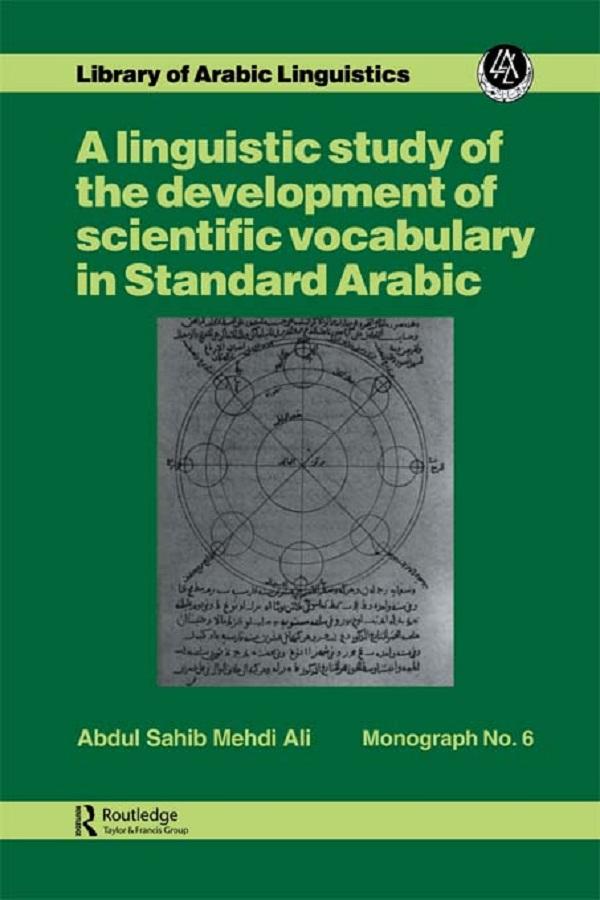
First published in 1987. The reasons behind the establishment of this Series on Arabic linguistics are manifold. First: Arabic linguistics is developing into an increasingly interesting and important subject within the broad field of modern linguistic studies. The subject is now fully recognised in the Universities of the Arabic speaking world and in international linguistic circles, as a subject of great theoretical and descriptive interest and importance. Second: Arabic linguistics is reaching a mature stage in its development benefiting both from early Arabic linguistic scholarship and modern techniques of general linguistics and related disciplines. Third: The scope of this discipline is wide and varied, covering diverse areas such as Arabic phonetics, phonology and grammar, Arabic psycholinguistics, Arabic dialectology, Arabic lexicography and lexicology, Arabic sociolinguistics, the teaching and learning of Arabic as a first, second, or foreign language, communications, semiotics, terminology, translation, machine translation, Arabic computational linguistics, history of Arabic linguistics, etc. This is monograph 6 in the series.
Betaal eenvoudig met kaart, Klarna, Apple Pay of Google Pay. Niet tevreden? Je hebt altijd 14 dagen bedenktijd. Lees meer in onze voorwaarden. Heb je vragen, mail ons dan via hello@memmo.org.
Memmo maakt studeren makkelijker – waar je ook bent ter wereld. Wij brengen je cursusboeken en slimme studietools samen op één plek: samenvattingen, quizzen, podcasts en flashcards. En Ted, je studievriend die antwoord geeft op alles wat je je afvraagt. Meer dan 50.000 studenten studeren hier al – gebouwd om je sneller te laten leren en minder stress te geven.
Misschien vind je dit ook leuk
Koop het boek0