
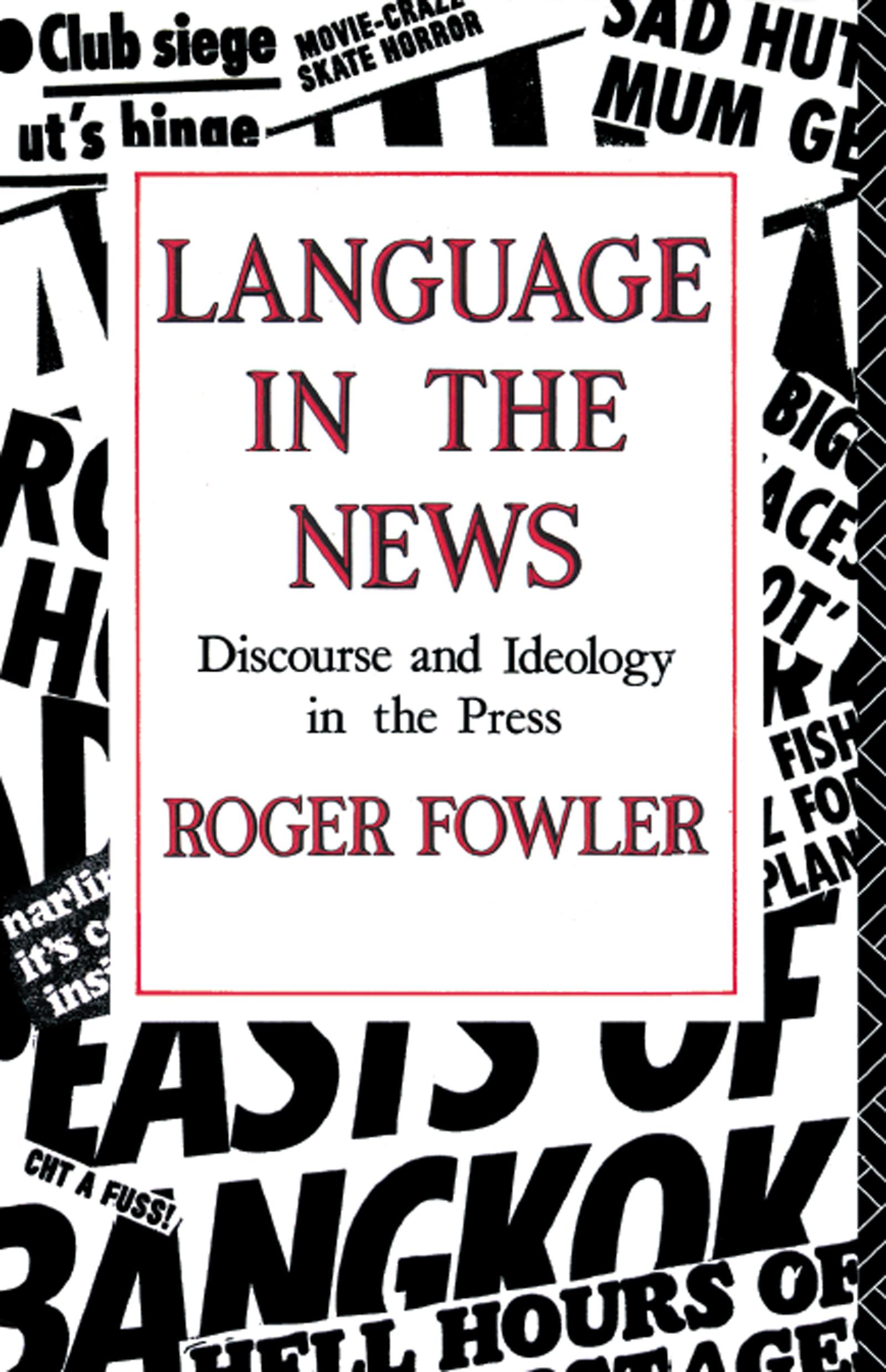
Newspaper coverage of world events is presented as the unbiased recording of `hard facts`. In an incisive study of both the quality and the popular press, Roger Fowler challenges this perception, arguing that news is a practice, a product of the social and political world on which it reports. Writing from the perspective of critical linguistics, Fowler examines the crucial role of language in mediating reality. Starting with a general account of news values and the processes of selection and transformation which go to make up the news, Fowler goes on to consider newspaper representations of gender, power, authority and law and order. He discusses stereotyping, terms of abuse and endearment, the editorial voice and the formation of consensus. Fowler's analysis takes in some of the major news stories of the Thatcher decade - the American bombing of Libya in 1986, the salmonella-in-eggs affair, the problems of the National Health Service and the controversy of youth and contraception.
Betaal eenvoudig met kaart, Klarna, Apple Pay of Google Pay. Niet tevreden? Je hebt altijd 14 dagen bedenktijd. Lees meer in onze voorwaarden. Heb je vragen, mail ons dan via hello@memmo.org.
Memmo maakt studeren makkelijker – waar je ook bent ter wereld. Wij brengen je cursusboeken en slimme studietools samen op één plek: samenvattingen, quizzen, podcasts en flashcards. En Ted, je studievriend die antwoord geeft op alles wat je je afvraagt. Meer dan 50.000 studenten studeren hier al – gebouwd om je sneller te laten leren en minder stress te geven.
Misschien vind je dit ook leuk
Koop het boek0