
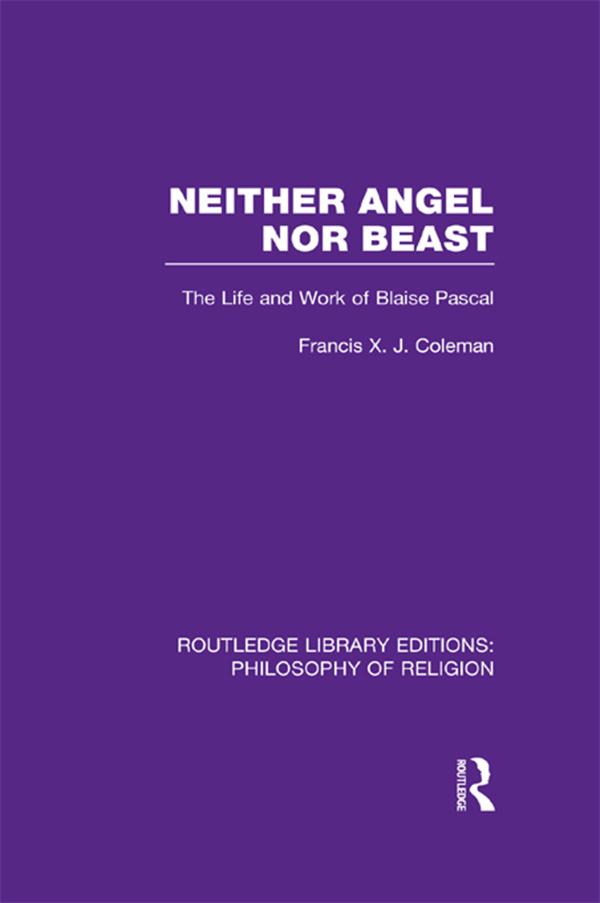
Blaise Pascal began as a mathematical prodigy, developed into a physicist and inventor, and had become by the end of his life in 1662 a profound religious thinker. As a philosopher, he was most convinced by the long tradition of scepticism, and so refused – like Kierkegaard – to build a philosophical or theological system. Instead, he argued that the human heart required other forms of discourse to come to terms with the basic existential questions – our nature, purpose and relationship with God.
This introduction to the life and philosophical thought of Pascal is intended for the general reader. Strikingly illustrated, it traces the antithetical tensions in Pascal’s life from his infancy, when he was said to have been placed under the spell of a sorceress, to his final years of extreme asceticism. Pascal stressed both the misery and greatness of humanity, our finitude and our comprehension of the infinite. The book shows how his life, philosophical thought and literary style can best be understood in the light of the paradoxical view of human nature. It covers the methods of argument and the central issues of the Provincial Letters and of the Pensées; the Introduction places Pascal’s thought in the religious and political climate of seventeenth-century France, and a ‘Chronology of the Life of Pascal’ is also included.
Betaal eenvoudig met kaart, Klarna, Apple Pay of Google Pay. Niet tevreden? Je hebt altijd 14 dagen bedenktijd. Lees meer in onze voorwaarden. Heb je vragen, mail ons dan via hello@memmo.org.
Memmo maakt studeren makkelijker – waar je ook bent ter wereld. Wij brengen je cursusboeken en slimme studietools samen op één plek: samenvattingen, quizzen, podcasts en flashcards. En Ted, je studievriend die antwoord geeft op alles wat je je afvraagt. Meer dan 50.000 studenten studeren hier al – gebouwd om je sneller te laten leren en minder stress te geven.