
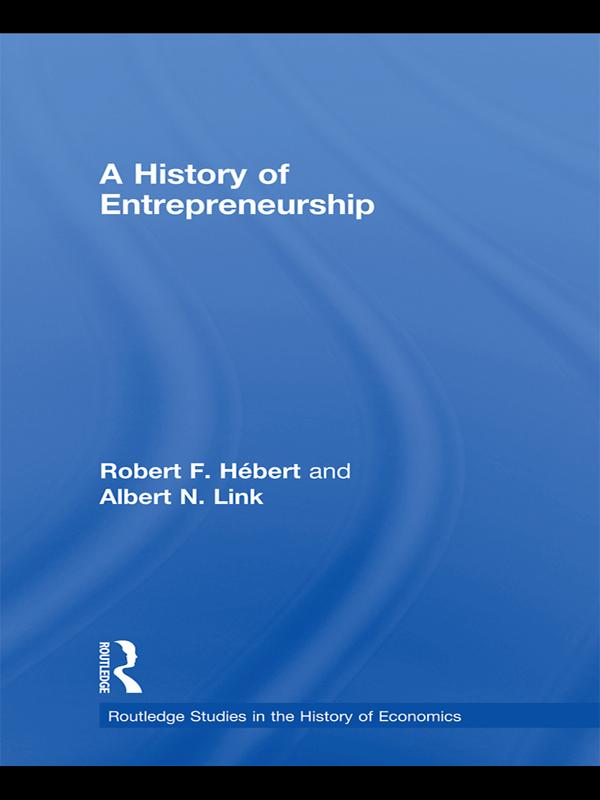
This book establishes a chronological trace of the entrepreneur as treated in economic literature in order to give a more wholesome perspective to contemporary writings and teachings on entrepreneurship. It focuses on the nature and role of the entrepreneur, and of entrepreneurship, as revealed in economic literature as early as the eighteenth century, when Richard Cantillon first coined the term 'entrepreneur'. The authors then trace how Joseph Schumpeter's perspective, among other’s, on entrepreneurship came to dominate the world's understanding of the term.
Due to Schumpeter’s dominant influence, entrepreneurship has come to occupy a primary role in the theory of economic development. In this book Hébert and Link discuss various key topics including the German Tradition, the Austrian and the English School of thought as well as individuals such as Alfred Marshall and Jeremy Bentham. The historical survey also illustrates the tension that often exists between "theory" and "practice" and how it has been difficult for economic theory to assimilate a core concept that plays a vital role in social and economic change. Finally, the book exposes the many different facets of entrepreneurship as they have been perceived by some of the great economists throughout the ages.
Betaal eenvoudig met kaart, Klarna, Apple Pay of Google Pay. Niet tevreden? Je hebt altijd 14 dagen bedenktijd. Lees meer in onze voorwaarden. Heb je vragen, mail ons dan via hello@memmo.org.
Memmo maakt studeren makkelijker – waar je ook bent ter wereld. Wij brengen je cursusboeken en slimme studietools samen op één plek: samenvattingen, quizzen, podcasts en flashcards. En Ted, je studievriend die antwoord geeft op alles wat je je afvraagt. Meer dan 50.000 studenten studeren hier al – gebouwd om je sneller te laten leren en minder stress te geven.