
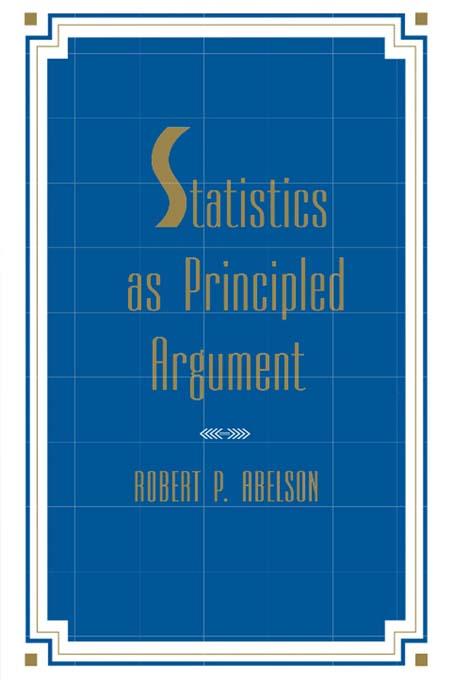
In this illuminating volume, Robert P. Abelson delves into the too-often dismissed problems of interpreting quantitative data and then presenting them in the context of a coherent story about one's research. Unlike too many books on statistics, this is a remarkably engaging read, filled with fascinating real-life (and real-research) examples rather than with recipes for analysis. It will be of true interest and lasting value to beginning graduate students and seasoned researchers alike.
The focus of the book is that the purpose of statistics is to organize a useful argument from quantitative evidence, using a form of principled rhetoric. Five criteria, described by the acronym MAGIC (magnitude, articulation, generality, interestingness, and credibility) are proposed as crucial features of a persuasive, principled argument.
Particular statistical methods are discussed, with minimum use of formulas and heavy data sets. The ideas throughout the book revolve around elementary probability theory, t tests, and simple issues of research design. It is therefore assumed that the reader has already had some access to elementary statistics. Many examples are included to explain the connection of statistics to substantive claims about real phenomena.
Betaal eenvoudig met kaart, Klarna, Apple Pay of Google Pay. Niet tevreden? Je hebt altijd 14 dagen bedenktijd. Lees meer in onze voorwaarden. Heb je vragen, mail ons dan via hello@memmo.org.
Memmo maakt studeren makkelijker – waar je ook bent ter wereld. Wij brengen je cursusboeken en slimme studietools samen op één plek: samenvattingen, quizzen, podcasts en flashcards. En Ted, je studievriend die antwoord geeft op alles wat je je afvraagt. Meer dan 50.000 studenten studeren hier al – gebouwd om je sneller te laten leren en minder stress te geven.