
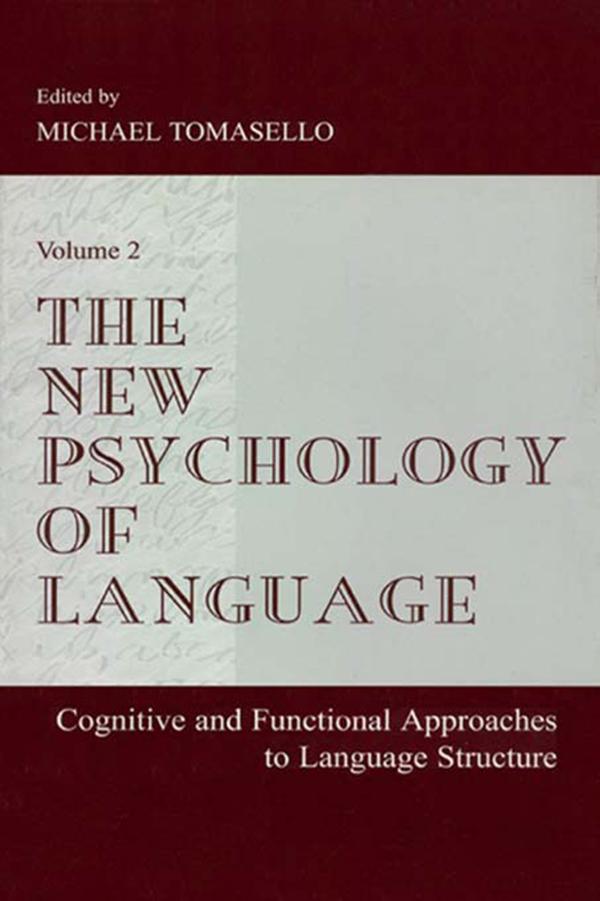
From the point of view of psychology and cognitive science, much of modern linguistics is too formal and mathematical to be of much use. The newly emerging approaches to language termed, "Functional and Cognitive Linguistics," however, are much less formally oriented. Instead, functional and cognitive approaches to language structure are typically couched in terms already familiar to cognitive scientists: perception, attention, conceptualization, meaning, symbols, categories, schemas, perspectives, discourse context, social interaction, and communicative goals. The account of human linguistic competence emerging from this new paradigm should be extremely useful to scientists studying how human beings (not formal devices) comprehend, produce, and acquire natural languages.
The current volume brings together 10 of the most important linguists in cognitive and functional linguistics whose work is often not easily available to those outside the field. In original contributions, each of these scholars focuses on an important aspect of human linguistic competence, with a special eye to readers who are not professional linguists. Of special importance to all of the contributions are the cognitive and social interactional processes that constitute human linguistic communication. The book is of special interest to psychologists, cognitive scientists, psycholinguists, and developmental psycholinguists, in addition to linguists taking a more psychological approach to language.
Betaal eenvoudig met kaart, Klarna, Apple Pay of Google Pay. Niet tevreden? Je hebt altijd 14 dagen bedenktijd. Lees meer in onze voorwaarden. Heb je vragen, mail ons dan via hello@memmo.org.
Memmo maakt studeren makkelijker – waar je ook bent ter wereld. Wij brengen je cursusboeken en slimme studietools samen op één plek: samenvattingen, quizzen, podcasts en flashcards. En Ted, je studievriend die antwoord geeft op alles wat je je afvraagt. Meer dan 50.000 studenten studeren hier al – gebouwd om je sneller te laten leren en minder stress te geven.