
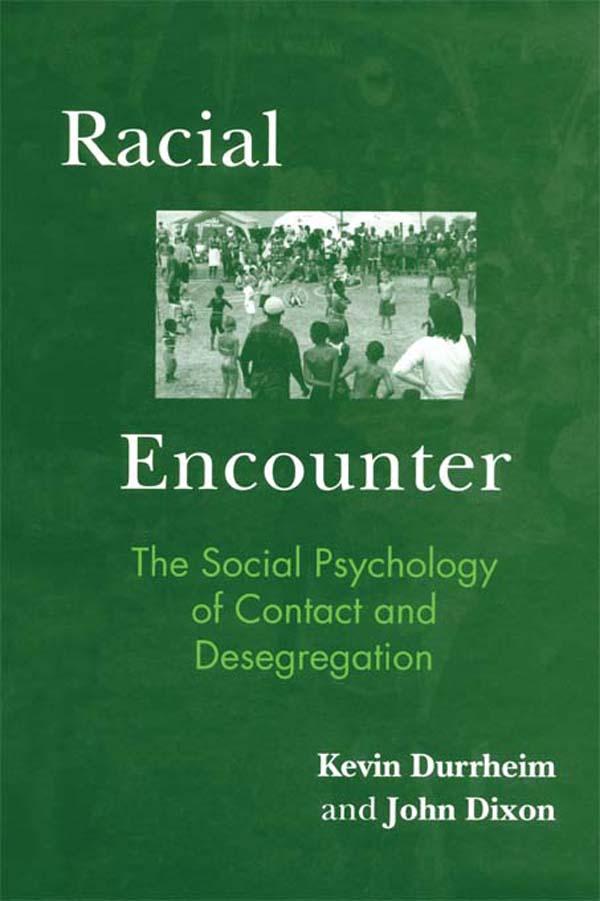
The political and legislative changes which took place in South Africa during the 1990s, with the dissolution of apartheid, created a unique set of social conditions. As official policies of segregation were abolished, people of both black and white racial groups began to experience new forms of social contact and intimacy.
By examining these emerging processes of intergroup contact in South Africa, and evaluating related evidence from the US, Racial Encounter offers a social psychological account of desegregation. It begins with a critical analysis of the traditional theories and research models used to understand desegregation: the contact hypothesis and race attitude theory. It then analyzes every day discourse about desegregation in South Africa, showing how discourse shapes individuals' conception and management of their changing relationships and acts as a site of ideological resistance to social change. The connection between place, identity and re-creation of racial boundaries emerge as a central theme of this analysis.
This book will be of interest to social psychologists, students of intergroup relations and all those interested in post-apartheid South Africa.
Betaal eenvoudig met kaart, Klarna, Apple Pay of Google Pay. Niet tevreden? Je hebt altijd 14 dagen bedenktijd. Lees meer in onze voorwaarden. Heb je vragen, mail ons dan via hello@memmo.org.
Memmo maakt studeren makkelijker – waar je ook bent ter wereld. Wij brengen je cursusboeken en slimme studietools samen op één plek: samenvattingen, quizzen, podcasts en flashcards. En Ted, je studievriend die antwoord geeft op alles wat je je afvraagt. Meer dan 50.000 studenten studeren hier al – gebouwd om je sneller te laten leren en minder stress te geven.