
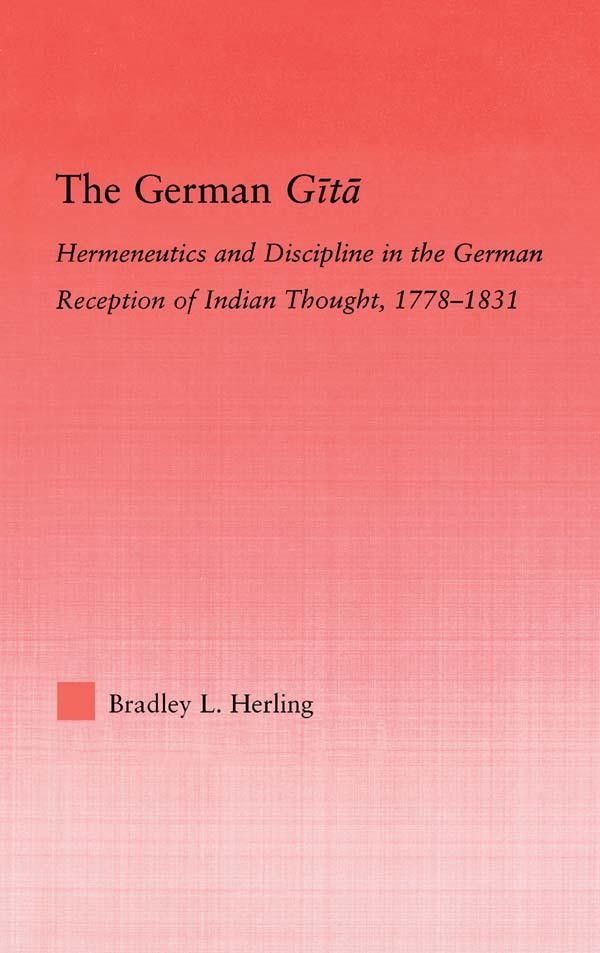
How did the Bhagavadgãtà first become an object of German philosophical and philological inquiry? How were its foundational concepts initially interpreted within German intellectual circles, and what does this episode in the history of cross-cultural encounter teach us about the status of comparative philosophy today? This book addresses these questions through a careful study of the figures who read, translated and interpreted the Bhagavadgãtà around the turn of the nineteenth century in Germany: J.G. Herder, F. Majer, F. Schlegel, A.W. Schlegel, W. von Humboldt, and G.W.F. Hegel. Methodologically, the study attends to the intellectual contexts and prejudices that framed the early reception of the text. But it also delves deeper by investigating the way these frameworks inflected the construction of the Bhagavadgãtà and its foundational concepts through the scholarly acts of excerpting, anthologization, and translation. Overall, the project contributes to the pluralization of Western philosophy and its history while simultaneously arguing for a continued critical alertness in cross-cultural comparison of philosophical and religious worldviews.
Betaal eenvoudig met kaart, Klarna, Apple Pay of Google Pay. Niet tevreden? Je hebt altijd 14 dagen bedenktijd. Lees meer in onze voorwaarden. Heb je vragen, mail ons dan via hello@memmo.org.
Memmo maakt studeren makkelijker – waar je ook bent ter wereld. Wij brengen je cursusboeken en slimme studietools samen op één plek: samenvattingen, quizzen, podcasts en flashcards. En Ted, je studievriend die antwoord geeft op alles wat je je afvraagt. Meer dan 50.000 studenten studeren hier al – gebouwd om je sneller te laten leren en minder stress te geven.