
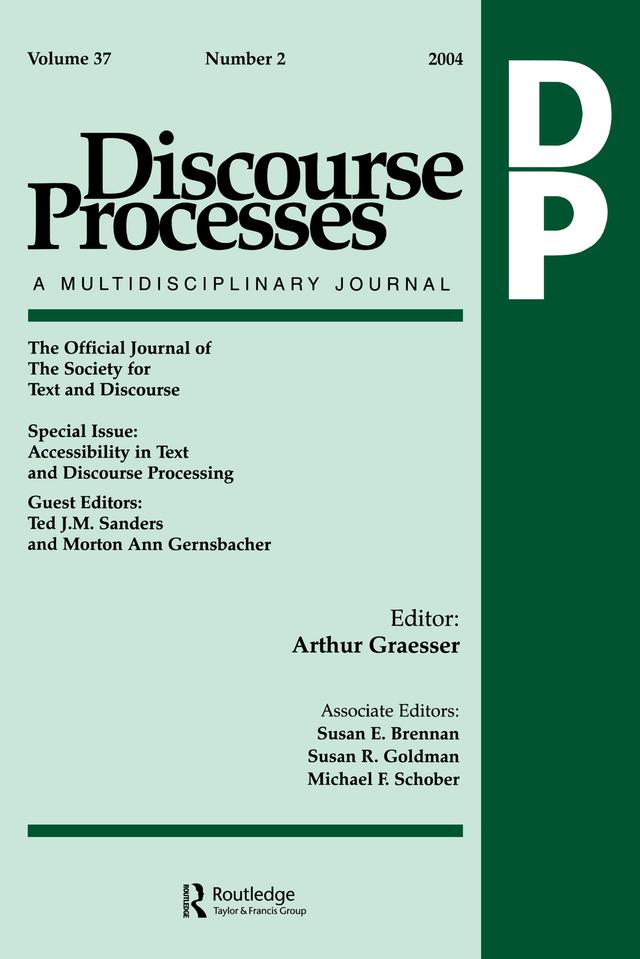
This special issue shows how accessibility phenomena need to be studied from a linguistic and psycholinguistic angle, and in the latter case from interpretation, as well as production. The contributions augment the growing knowledge of accessibility in text and discourse processing. They also illuminate how accessibility is marked in a text or a discourse, how readers and listeners respond to those markings, and how mental representations evolve and change as a direct result of accessibility. The editors hope is that the text affects the readers' representations in ways that linguists and psycholinguists theorize as beneficial.
Betaal eenvoudig met kaart, Klarna, Apple Pay of Google Pay. Niet tevreden? Je hebt altijd 14 dagen bedenktijd. Lees meer in onze voorwaarden. Heb je vragen, mail ons dan via hello@memmo.org.
Memmo maakt studeren makkelijker – waar je ook bent ter wereld. Wij brengen je cursusboeken en slimme studietools samen op één plek: samenvattingen, quizzen, podcasts en flashcards. En Ted, je studievriend die antwoord geeft op alles wat je je afvraagt. Meer dan 50.000 studenten studeren hier al – gebouwd om je sneller te laten leren en minder stress te geven.