
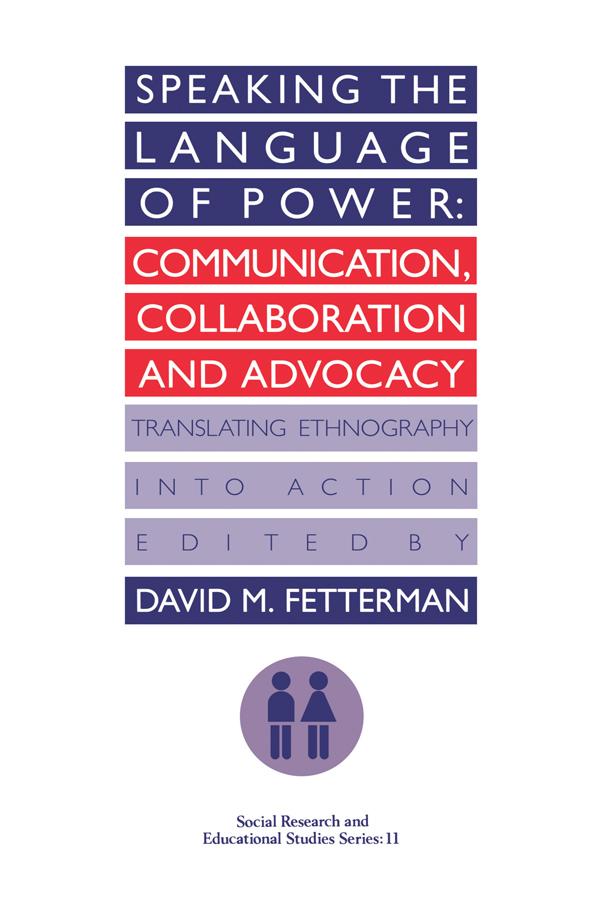
First Published in 1993. Speaking the Language of Power is about how a group of socially concerned scholars are making their ethnographic insights and findings useful to decision makers. They address a host of significant issues, including conflict resolution, the dropout problem, environmental health and safety, homelessness, educational reform, the situation of American Indians, AIDS, and the education of gifted children. Myriad strategies are being used by practicing anthropologists to ensure that they have an impact on sponsors and policy decision makers. The book focuses on the use of language and rhetorical style to enhance communication and effectiveness. Within that framework, the approaches presented in this collection range from translating qualitative information into quantitative forms to testifying about specific legislation on Capitol Hill. The chapters artfully blend the three themes of this book - communication, collaboration, and advocacy. Building on the enormous contributions made by qualitative researchers throughout the world, the aim of this discourse is to explore successful strategies, share lessons learned, and enhance the ability to communicate with an educated citizenry and powerful policymaking bodies. The spirit driving the dedication displayed in each chapter is simple - to improve the world we live in, to make it a better place for our children and our children's children.
Betaal eenvoudig met kaart, Klarna, Apple Pay of Google Pay. Niet tevreden? Je hebt altijd 14 dagen bedenktijd. Lees meer in onze voorwaarden. Heb je vragen, mail ons dan via hello@memmo.org.
Memmo maakt studeren makkelijker – waar je ook bent ter wereld. Wij brengen je cursusboeken en slimme studietools samen op één plek: samenvattingen, quizzen, podcasts en flashcards. En Ted, je studievriend die antwoord geeft op alles wat je je afvraagt. Meer dan 50.000 studenten studeren hier al – gebouwd om je sneller te laten leren en minder stress te geven.
Misschien vind je dit ook leuk
Koop het boek0