
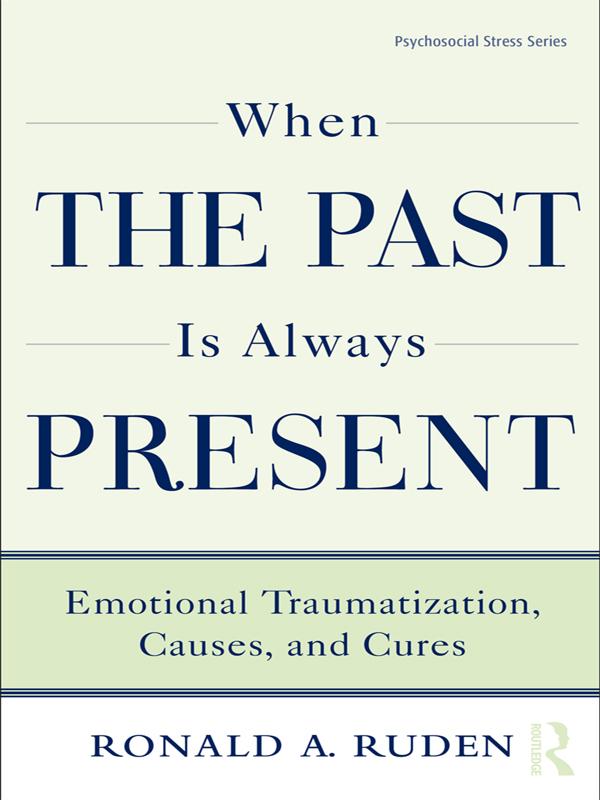
When the Past Is Always Present: Emotional Traumatization, Causes, and Cures introduces several new ideas about trauma and trauma treatment. The first of these is that another way to treat disorders arising from the mind/brain may be to use the senses. This idea, which is at the core of psychosensory therapy, forms what the author considers the "third pillar" of trauma treatment (the first and second pillars being psychotherapy and psychopharmacology). Psychosensory therapy postulates that sensory input—for example, touch—creates extrasensory activity that alters brain function and the way we respond to stimuli.
The second idea presented in this book is that traumatization is encoded in the amygdala only under special circumstances. Thus, by understanding what makes an individual resistant to traumatization we can offer a way of preventing it.
The third idea is that traumatization occurs because we cannot find a haven during the event. This is the cornerstone of havening, the particular form of psychosensory therapy described in the book. Using evolutionary biological principles and recently published neuroscientific studies, this book outlines in detail how havening touch de-links the emotional experience from a trauma, essentially making it just an ordinary memory. Once done, the event no longer causes distress.
Betaal eenvoudig met kaart, Klarna, Apple Pay of Google Pay. Niet tevreden? Je hebt altijd 14 dagen bedenktijd. Lees meer in onze voorwaarden. Heb je vragen, mail ons dan via hello@memmo.org.
Memmo maakt studeren makkelijker – waar je ook bent ter wereld. Wij brengen je cursusboeken en slimme studietools samen op één plek: samenvattingen, quizzen, podcasts en flashcards. En Ted, je studievriend die antwoord geeft op alles wat je je afvraagt. Meer dan 50.000 studenten studeren hier al – gebouwd om je sneller te laten leren en minder stress te geven.