
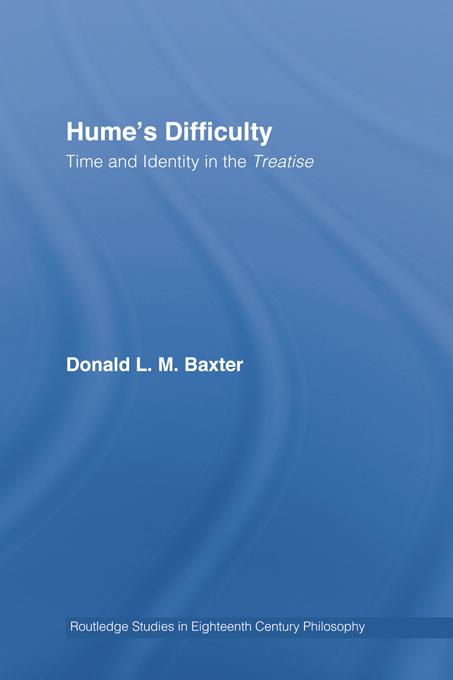
In this volume--the first, focused study of Hume on time and identity--Baxter focuses on Hume’s treatment of the concept of numerical identity, which is central to Hume's famous discussions of the external world and personal identity. Hume raises a long unappreciated, and still unresolved, difficulty with the concept of identity: how to represent something as "a medium betwixt unity and number." Superficial resemblance to Frege’s famous puzzle has kept the difficulty in the shadows. Hume’s way of addressing it makes sense only in the context of his unorthodox theory of time. Baxter shows the defensibility of that theory against past dismissive interpretations, especially of Hume’s stance on infinite divisibility. Later the author shows how the difficulty underlies Hume’s later worries about his theory of personal identity, in a new reading motivated by Hume’s important appeals to consciousness. Baxter casts Hume throughout as an acute metaphysician, and reconciles this side of Hume with his overarching Pyrrhonian skepticism.
Betaal eenvoudig met kaart, Klarna, Apple Pay of Google Pay. Niet tevreden? Je hebt altijd 14 dagen bedenktijd. Lees meer in onze voorwaarden. Heb je vragen, mail ons dan via hello@memmo.org.
Memmo maakt studeren makkelijker – waar je ook bent ter wereld. Wij brengen je cursusboeken en slimme studietools samen op één plek: samenvattingen, quizzen, podcasts en flashcards. En Ted, je studievriend die antwoord geeft op alles wat je je afvraagt. Meer dan 50.000 studenten studeren hier al – gebouwd om je sneller te laten leren en minder stress te geven.