
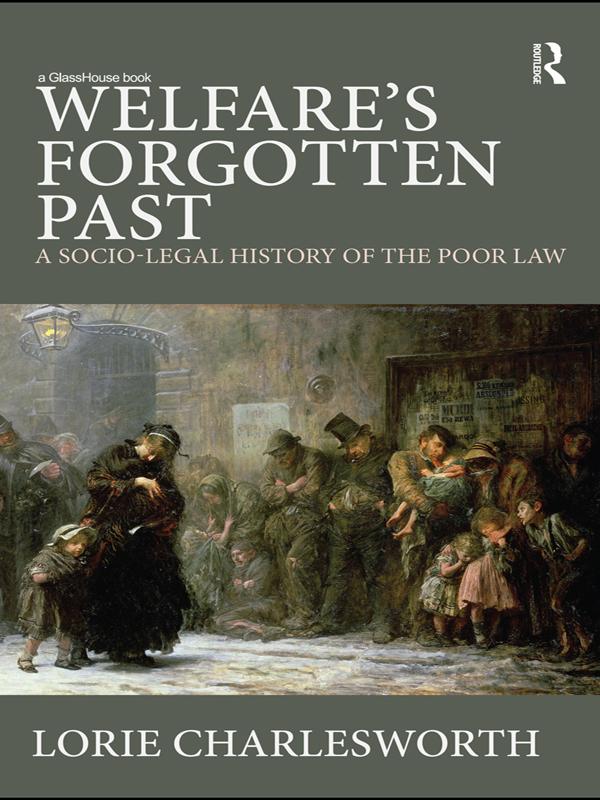
That ‘poor law was law’ is a fact that has slipped from the consciousness of historians of welfare in England and Wales, and in North America. Welfare's Forgotten Past remedies this situation by tracing the history of the legal right of the settled poor to relief when destitute. Poor law was not simply local custom, but consisted of legal rights, duties and obligations that went beyond social altruism. This legal ‘truth’ is, however, still ignored or rejected by some historians, and thus ‘lost’ to social welfare policy-makers. This forgetting or minimising of a legal, enforceable right to relief has not only led to a misunderstanding of welfare’s past; it has also contributed to the stigmatisation of poverty, and the emergence and persistence of the idea that its relief is a 'gift' from the state.
Documenting the history and the effects of this forgetting, whilst also providing a ‘legal’ history of welfare, Lorie Charlesworth argues that it is timely for social policy-makers and reformists – in Britain, the United States and elsewhere – to reconsider an alternative welfare model, based on the more positive, legal aspects of welfare’s 400-year legal history.
Betaal eenvoudig met kaart, Klarna, Apple Pay of Google Pay. Niet tevreden? Je hebt altijd 14 dagen bedenktijd. Lees meer in onze voorwaarden. Heb je vragen, mail ons dan via hello@memmo.org.
Memmo maakt studeren makkelijker – waar je ook bent ter wereld. Wij brengen je cursusboeken en slimme studietools samen op één plek: samenvattingen, quizzen, podcasts en flashcards. En Ted, je studievriend die antwoord geeft op alles wat je je afvraagt. Meer dan 50.000 studenten studeren hier al – gebouwd om je sneller te laten leren en minder stress te geven.