
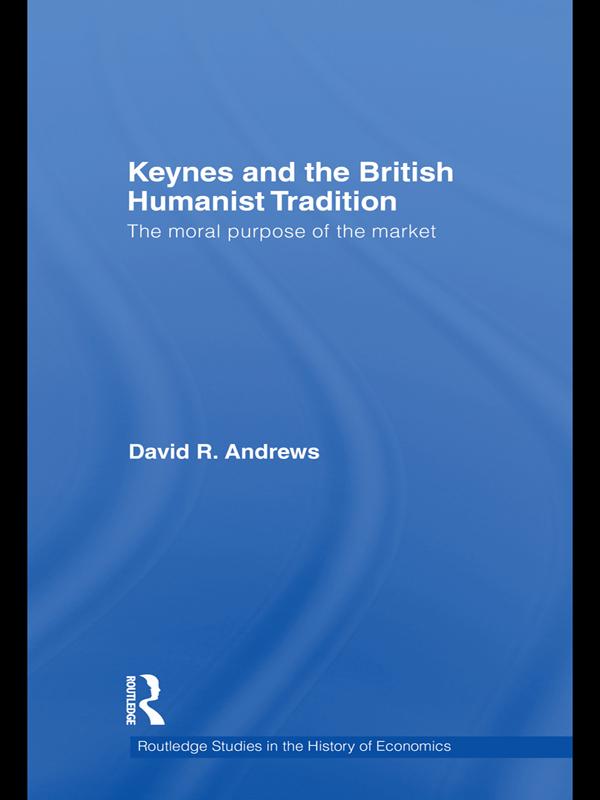
Well-connected in academia, business and government, John Maynard Keynes was one of the most influential economic theorists of the twentieth century. It appears that his theories will be just as important for the twenty-first. As Keynes himself explained, his ideas throughout his life were influenced by the moral philosophy he learned as an undergraduate. Nevertheless, the meaning and significance for Keynes of this early philosophy have remained largely unexplored.
Keynes and the British Humanist Tradition offers an interpretation of Keynes’s early philosophy and its implications for his later thought. It approaches that philosophy from the perspective of the nineteenth century intellectual context out of which it emerged. The book argues that roots of Keynes’s early beliefs are to be found in the traditions of the Apostles, the very famous secret society to which he and most of his teachers belonged. The principles of Keynes’s philosophy can be seen in such writers as John Stuart Mill and Henry Sidgwick, but the underlying ideas have been obscured by changing fashions in philosophy and thus require excavation and reconstruction.
This book will be of interest to students and researchers in the history of economics, in particular the thought of John Maynard Keynes, especially his ethics, politics and economics.
Betaal eenvoudig met kaart, Klarna, Apple Pay of Google Pay. Niet tevreden? Je hebt altijd 14 dagen bedenktijd. Lees meer in onze voorwaarden. Heb je vragen, mail ons dan via hello@memmo.org.
Memmo maakt studeren makkelijker – waar je ook bent ter wereld. Wij brengen je cursusboeken en slimme studietools samen op één plek: samenvattingen, quizzen, podcasts en flashcards. En Ted, je studievriend die antwoord geeft op alles wat je je afvraagt. Meer dan 50.000 studenten studeren hier al – gebouwd om je sneller te laten leren en minder stress te geven.