
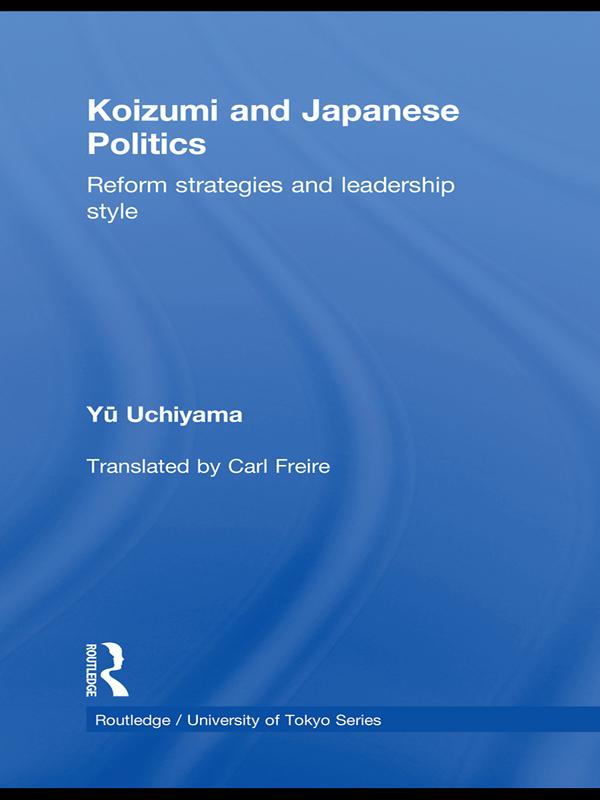
This book offers an empirical and theoretical study of the Koizumi administration, covering such issues as the characteristics of its political style, its domestic and foreign policies, and its larger historical significance. The key questions that guide its approach are: what enabled Koizumi to exercise unusually strong leadership, and what structural transformations of Japanese politics did he achieve?
Uchiyama looks at policy-making processes, newly created institutional arenas such as the Council on Economic and Fiscal Policy, Koizumi’s populist strategy, foreign policy, and neo-liberal convictions to assess the historical significance of his administration and seek out the basis for its wide public support.
Finally, the book undertakes a normative evaluation of the merits and demerits of the Koizumi administration’s political style, and compares it with the Abe and Fukuda administrations that came after. This book will be of interest to scholars and students with an interest in comparative politics, administrative reform, and contemporary Japan.
Betaal eenvoudig met kaart, Klarna, Apple Pay of Google Pay. Niet tevreden? Je hebt altijd 14 dagen bedenktijd. Lees meer in onze voorwaarden. Heb je vragen, mail ons dan via hello@memmo.org.
Memmo maakt studeren makkelijker – waar je ook bent ter wereld. Wij brengen je cursusboeken en slimme studietools samen op één plek: samenvattingen, quizzen, podcasts en flashcards. En Ted, je studievriend die antwoord geeft op alles wat je je afvraagt. Meer dan 50.000 studenten studeren hier al – gebouwd om je sneller te laten leren en minder stress te geven.