
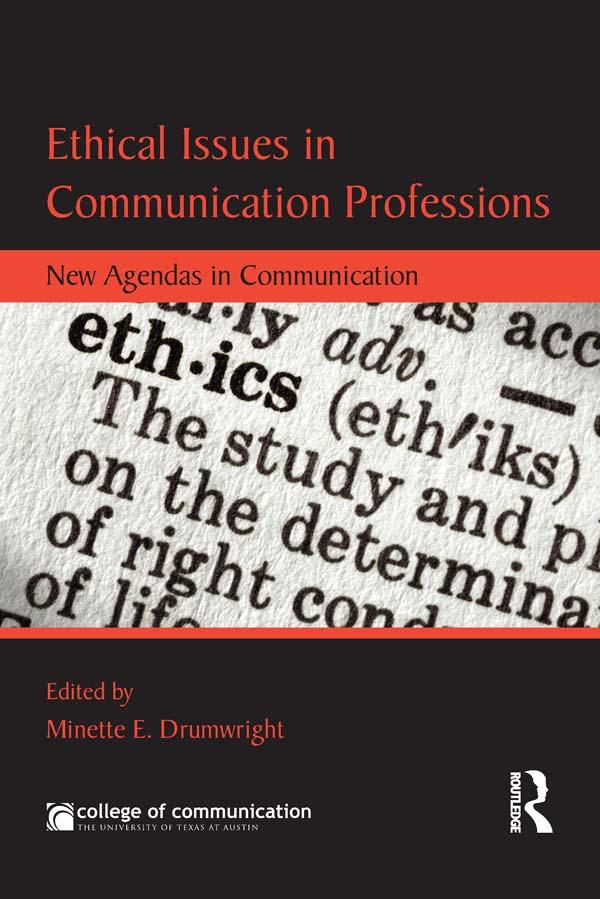
Dynamic, rapid, and radical changes are transforming the communication professions, provoking major implications for ethics. Traditional boundaries blur as media converge; relentless competitive pressures cause some forms of communication to atrophy and permit others to explode; and technological advances occur daily. In this volume, a new generation of scholars take a fresh look at the manner in which ethical issues manifest themselves in their areas of research and suggest new agendas for future research.
This book addresses a wide range of questions from a variety of communication professions. Contributors tackle such issues as how to define a journalist in an era when anyone can disseminate information to a global audience; how to use "advergames," crowdsourcing, and facial recognition technology in advertising responsibly; and how to respond ethically in situations of public crisis communication, among many others. This volume will be critical reading for scholars and professionals in media, communication, and digital arts, as well as philosophy, government, public policy, business, and law.
Betaal eenvoudig met kaart, Klarna, Apple Pay of Google Pay. Niet tevreden? Je hebt altijd 14 dagen bedenktijd. Lees meer in onze voorwaarden. Heb je vragen, mail ons dan via hello@memmo.org.
Memmo maakt studeren makkelijker – waar je ook bent ter wereld. Wij brengen je cursusboeken en slimme studietools samen op één plek: samenvattingen, quizzen, podcasts en flashcards. En Ted, je studievriend die antwoord geeft op alles wat je je afvraagt. Meer dan 50.000 studenten studeren hier al – gebouwd om je sneller te laten leren en minder stress te geven.