
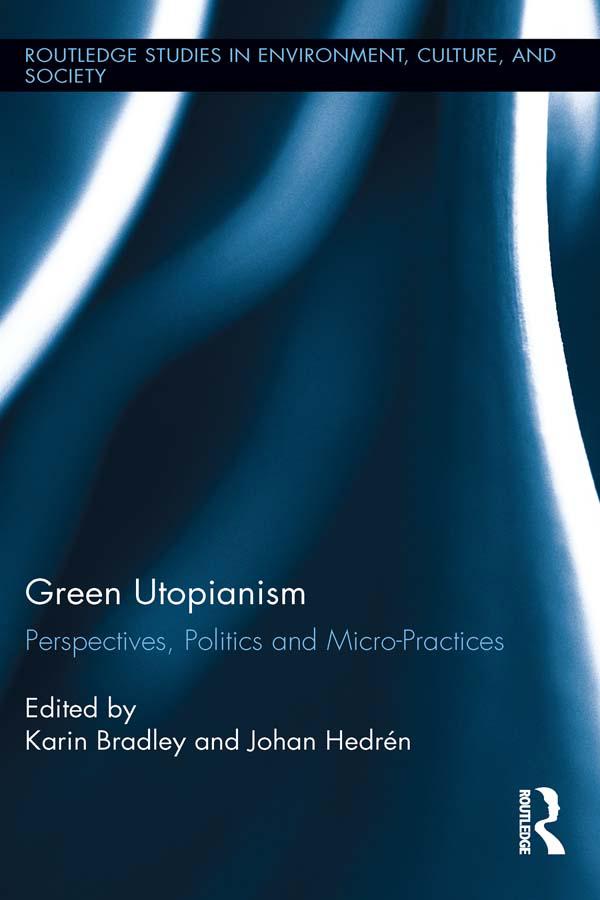
Utopian thought and experimental approaches to societal organization have been rare in the last decades of planning and politics. Instead, there is a widespread belief in ecological modernization, that sustainable societies can be created within the frame of the current global capitalist world order by taking small steps such as eco-labeling, urban densification, and recycling. However, in the context of the current crisis in which resource depletion, climate change, uneven development, and economic instability are seen as interlinked, this belief is increasingly being questioned and alternative developmental paths sought. This collection demonstrates how utopian thought can be used in a contemporary context, as critique and in exploring desired futures. The book includes theoretical perspectives on changing global socio-environmental relationships and political struggles for alternative development paths, and analyzes micro-level practices in co-housing, alternative energy provision, use of green space, transportation, co-production of urban space, peer-to-peer production and consumption, and alternative economies. It contributes research perspectives on contemporary green utopian practices and strategies, combining theoretical and empirical analyses to spark discussions of possible futures.
Betaal eenvoudig met kaart, Klarna, Apple Pay of Google Pay. Niet tevreden? Je hebt altijd 14 dagen bedenktijd. Lees meer in onze voorwaarden. Heb je vragen, mail ons dan via hello@memmo.org.
Memmo maakt studeren makkelijker – waar je ook bent ter wereld. Wij brengen je cursusboeken en slimme studietools samen op één plek: samenvattingen, quizzen, podcasts en flashcards. En Ted, je studievriend die antwoord geeft op alles wat je je afvraagt. Meer dan 50.000 studenten studeren hier al – gebouwd om je sneller te laten leren en minder stress te geven.