
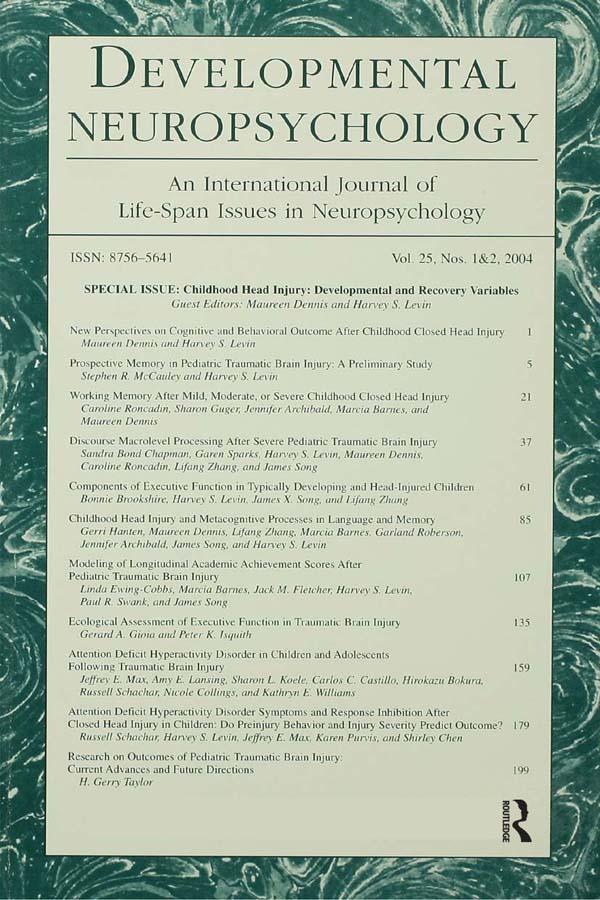
Childhood head injuries differ from adult head injuries in some significant respects. They occur against a background of ongoing physical and cognitive development. Cognitive capacities often change with time post-injury. But for children changes are affected by two processes of functional plasticity, one concerned with recovery, one with development. The impact of the injury is moderated by age/developmental stage.
In recent years there has been a new focus on the longitudinal comparison of children post-injury with appropriate control groups. Advances in neuropsychological assessment have permitted evaluation with reference to more developmentally suitable norms; expanded definitions of outcome have broadened our understanding of consequences; and neuroimaging techniques have enabled the more precise delineation of injury severity, the study of structure-function outcome relations, and the investigation of reorganization of function.
This special issue offers an overview of cutting-edge approaches to the analysis of childhood head injury.
Betaal eenvoudig met kaart, Klarna, Apple Pay of Google Pay. Niet tevreden? Je hebt altijd 14 dagen bedenktijd. Lees meer in onze voorwaarden. Heb je vragen, mail ons dan via hello@memmo.org.
Memmo maakt studeren makkelijker – waar je ook bent ter wereld. Wij brengen je cursusboeken en slimme studietools samen op één plek: samenvattingen, quizzen, podcasts en flashcards. En Ted, je studievriend die antwoord geeft op alles wat je je afvraagt. Meer dan 50.000 studenten studeren hier al – gebouwd om je sneller te laten leren en minder stress te geven.