
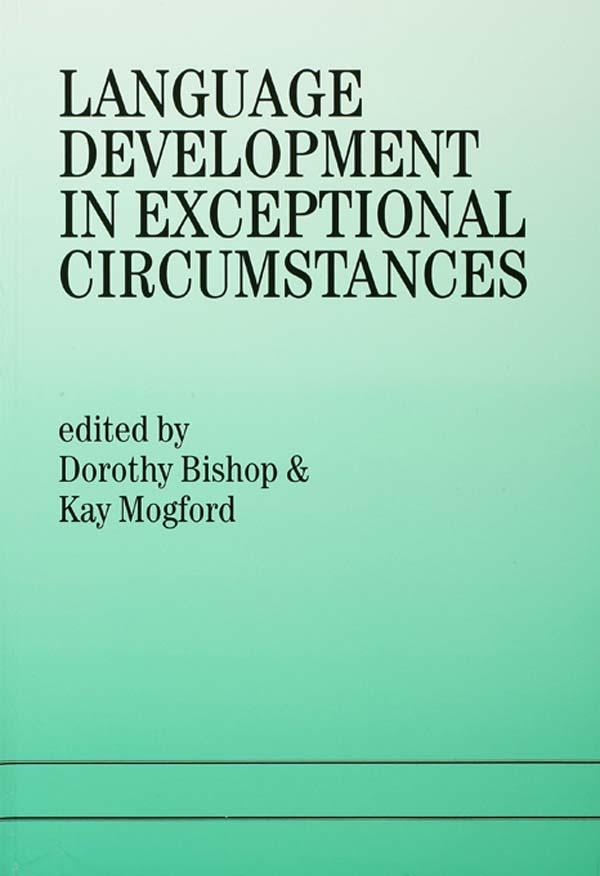
Ever since attempts were made to describe and explain normal language development, references to exceptional circumstances have been made. Variations in the conditions under which language is acquired can be regarded as natural experiments, which would not be feasible or ethical under normal circumstances. This can throw light on such questions as:
*What language input is necessary for the child to learn language?
*What is the relationship between cognition and language?
*How independent are different components of language function?
*Are there critical periods for language development?
*Can we specify necessary and sufficient conditions for language impairment? This book covers a range of exceptional circumstances including: extreme deprivation, twinship, visual and auditory impairments, autism and focal brain damage?
Written in a jargon-free style, and including a glossary of linguistic and medical terminology, the book assumes little specialist knowledge. This text is suitable for both students and practitioners in the fields of psycholinguistics, developmental and educational psychology, speech pathology, paediatrics and special education.
Betaal eenvoudig met kaart, Klarna, Apple Pay of Google Pay. Niet tevreden? Je hebt altijd 14 dagen bedenktijd. Lees meer in onze voorwaarden. Heb je vragen, mail ons dan via hello@memmo.org.
Memmo maakt studeren makkelijker – waar je ook bent ter wereld. Wij brengen je cursusboeken en slimme studietools samen op één plek: samenvattingen, quizzen, podcasts en flashcards. En Ted, je studievriend die antwoord geeft op alles wat je je afvraagt. Meer dan 50.000 studenten studeren hier al – gebouwd om je sneller te laten leren en minder stress te geven.
Misschien vind je dit ook leuk
Koop het boek0