
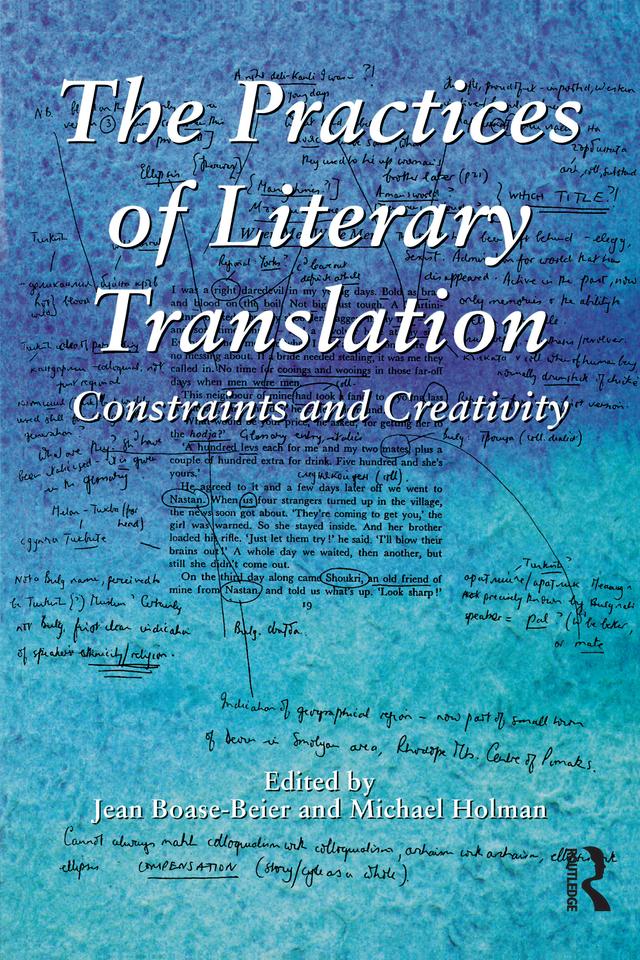
In their introduction to this collection of essays, the editors argue that constraints can be seen as a source of literary creativity, and given that translation is even more constrained than 'original' literary production, it thus has the potential to be even more creative too. The ten essays that follow outline ways in which translators and translations are constrained by poetic form, personal histories, state control, public morality, and the non-availability of comparable target language subcodes, and how translator creativity may-or may not-overcome these constraints. Topics covered are: Baudelaire's translation practices; bowdlerism in translations of Voltaire, Boccaccio and Shakespeare, among others; Leyris's translations of Gerard Manley Hopkins; ideology in English-Arabic translation; the translation of censored Greek poet Rhea Galanaki; theatre translation; Nabokov and translation; gay translation; Moratín's translation of Hamlet; and state control of translation production in Nazi Germany. The essays are mostly highly readable, and often entertaining.
Betaal eenvoudig met kaart, Klarna, Apple Pay of Google Pay. Niet tevreden? Je hebt altijd 14 dagen bedenktijd. Lees meer in onze voorwaarden. Heb je vragen, mail ons dan via hello@memmo.org.
Memmo maakt studeren makkelijker – waar je ook bent ter wereld. Wij brengen je cursusboeken en slimme studietools samen op één plek: samenvattingen, quizzen, podcasts en flashcards. En Ted, je studievriend die antwoord geeft op alles wat je je afvraagt. Meer dan 50.000 studenten studeren hier al – gebouwd om je sneller te laten leren en minder stress te geven.
Misschien vind je dit ook leuk
Koop het boek0