
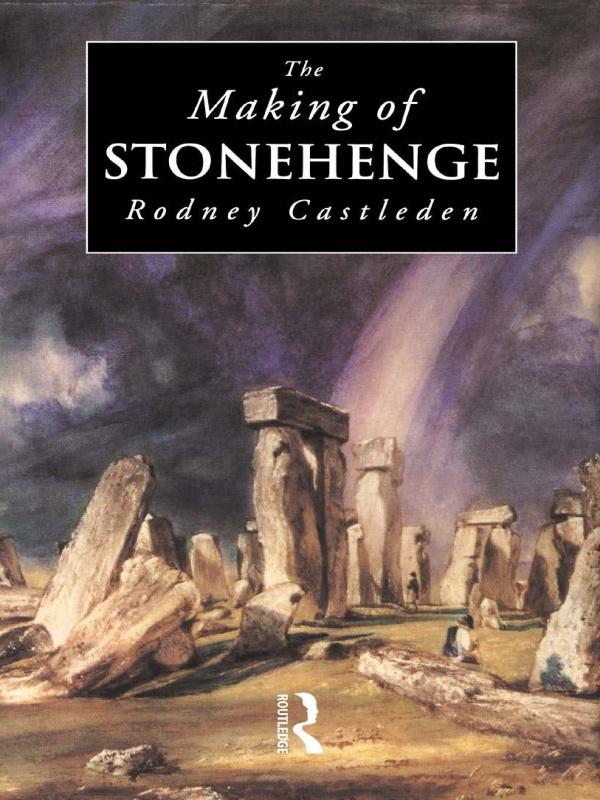
Every generation has created its own interpretation of Stonehenge, but rarely do these relate to the physical realities of the monument. Rodney Castleden begins with those elements which made possible the building of this vast stone circle: the site, the materials and the society that undertook the enormous task of transporting and raising the great vertical stones, then capping them, all to a carefully contrived plan.
What emerges from this detailed examination is a much fuller sense of Stonehenge, both in relation to all the similar sites close by, and in terms of the uses to which it was put. Castleden suggests that there is no one 'meaning' or 'purpose' for Stonehenge, that from its very beginning it has filled a variety of needs. The Romans saw it as a centre of resistance; the antiquaries who 'rediscovered' it in the seventeenth century saw a long line of continuity leading back into the nation's past. The archaeologists see it as a subject for rational, scientific investigation; The National Trust and English Heritage view it as an unfailing magnet for visitors; UNESCO has declared it a World Heritage Site, the cultural property of the whole of humanity. Lost to view amid competing interests over the millenia are the uses it has served for those who live within its penumbra, for whom Stonehenge has never been 'lost' or 'rediscovered'. It exists in local myth and legend, stretching back beyond history.
Betaal eenvoudig met kaart, Klarna, Apple Pay of Google Pay. Niet tevreden? Je hebt altijd 14 dagen bedenktijd. Lees meer in onze voorwaarden. Heb je vragen, mail ons dan via hello@memmo.org.
Memmo maakt studeren makkelijker – waar je ook bent ter wereld. Wij brengen je cursusboeken en slimme studietools samen op één plek: samenvattingen, quizzen, podcasts en flashcards. En Ted, je studievriend die antwoord geeft op alles wat je je afvraagt. Meer dan 50.000 studenten studeren hier al – gebouwd om je sneller te laten leren en minder stress te geven.
Misschien vind je dit ook leuk
Koop het boek0