
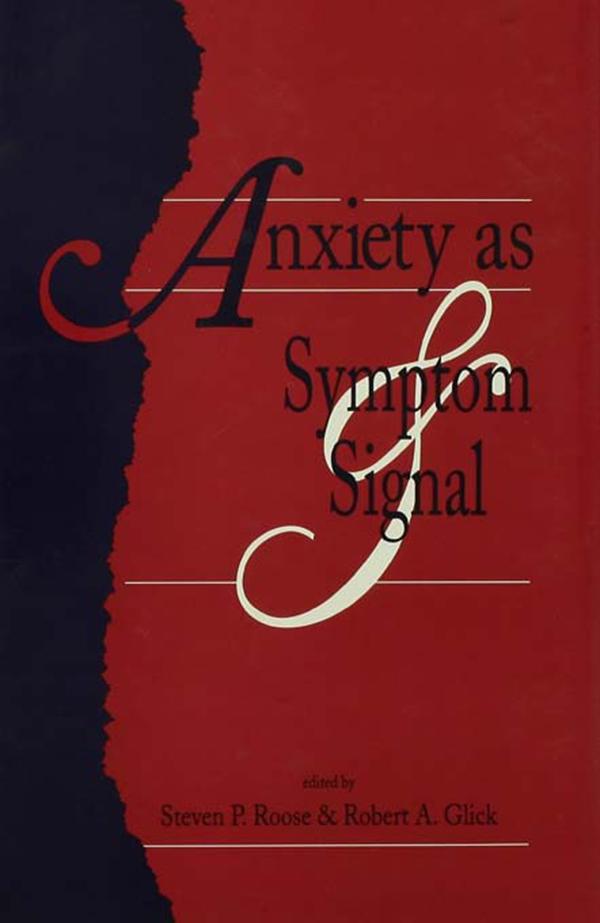
The concept of anxiety has long held a central place in psychoanalytic theories of mind and treatment. Yet, in recent years, data from the neurosciences and from pharmacological studies have posed a compelling challenge to psychoanalytic models of anxiety. One major outcome of these studies is the realization that anxiety both organizes and disorganizes, that it can be both symptom and signal. In Anxiety as Symptom and Signal, editors Steven Roose and Robert Glick have brought together distinguished contributors to address these different dimensions of anxiety. A section of original papers on "Anxiety as Symptom" covers evolutionary, neuroanatomical, genetic, and developmental perspectives. A complementary section on "Anxiety as Signal" focuses on the meanings and functions of anxiety in the clinical process; contributions address anxiety in its ego-psychological, intersubjective, and relational dimensions.
The illuminating, readable collection will broaden clinicians' awareness of the diverse research findings that now inform our understanding of anxiety. No less importantly, it will deepen their appreciation of the richly variegated ways that anxiety can shape, and be shaped by, the clinical process.
Betaal eenvoudig met kaart, Klarna, Apple Pay of Google Pay. Niet tevreden? Je hebt altijd 14 dagen bedenktijd. Lees meer in onze voorwaarden. Heb je vragen, mail ons dan via hello@memmo.org.
Memmo maakt studeren makkelijker – waar je ook bent ter wereld. Wij brengen je cursusboeken en slimme studietools samen op één plek: samenvattingen, quizzen, podcasts en flashcards. En Ted, je studievriend die antwoord geeft op alles wat je je afvraagt. Meer dan 50.000 studenten studeren hier al – gebouwd om je sneller te laten leren en minder stress te geven.