
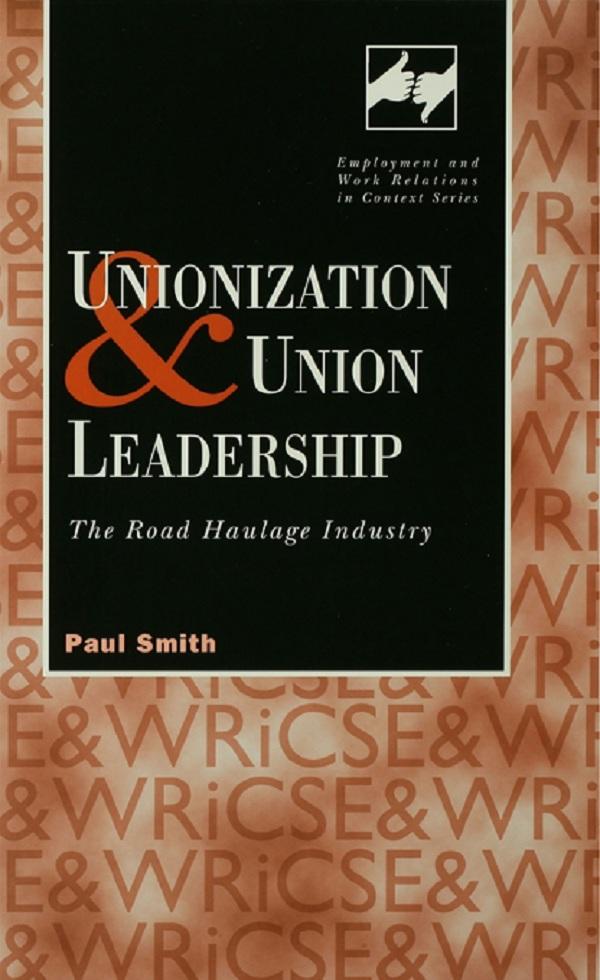
The focus of this book is the process of unionization in the road haulage industry, in particular, the role of leadership in determining the quality of union organization. It analyzes the early history of road haulage unions, the creation of the TGWU, the failure to organize the industry during the 1930s and the consequent reliance upon statutory regulation of wages and conditions, and the subsequent institutional stasis of the TGWU during the 1950s. The transformation and expansion of union organization during the period of 1963-1973, conceived as the mobilization of collective power by workers within the employment relationship, is explored in case studies of TGWU branches in Birmingham, Liverpool and London, and within the wider context of TGWU. The retrenchment of union organization as a result of recession and Conservative government legislation, 1980-1994, is explored. The book concludes with an assessment of theories of unionization and democracy, and the role of leadership, with reference to the historical development of British trade unionism. The research utilizes oral and documentary sources, including hitherto unused archives of the TGWU and the Road Haulage Association.
Betaal eenvoudig met kaart, Klarna, Apple Pay of Google Pay. Niet tevreden? Je hebt altijd 14 dagen bedenktijd. Lees meer in onze voorwaarden. Heb je vragen, mail ons dan via hello@memmo.org.
Memmo maakt studeren makkelijker – waar je ook bent ter wereld. Wij brengen je cursusboeken en slimme studietools samen op één plek: samenvattingen, quizzen, podcasts en flashcards. En Ted, je studievriend die antwoord geeft op alles wat je je afvraagt. Meer dan 50.000 studenten studeren hier al – gebouwd om je sneller te laten leren en minder stress te geven.
Misschien vind je dit ook leuk
Koop het boek0