
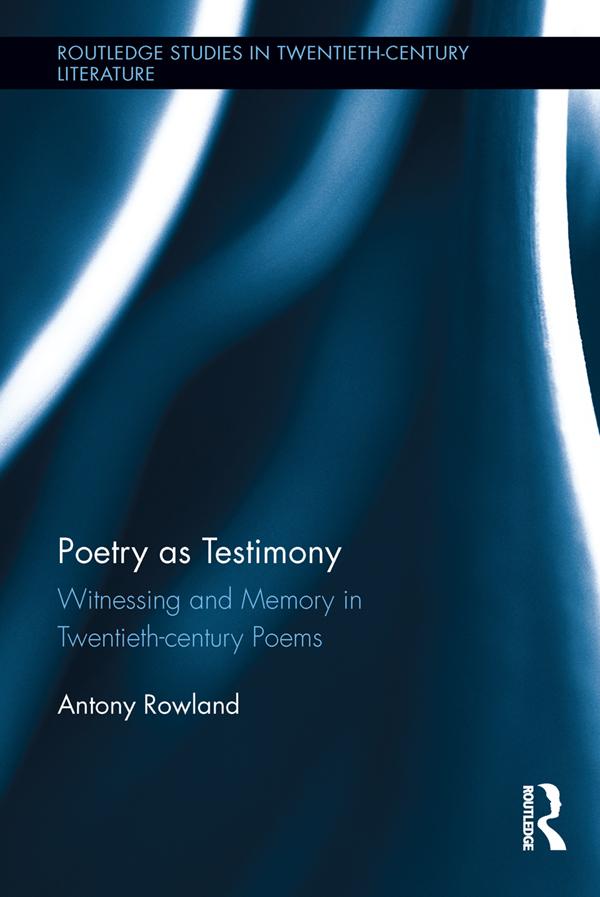
This book analyzes Holocaust poetry, war poetry, working-class poetry, and 9/11 poetry as forms of testimony. Rowland argues that testamentary poetry requires a different approach to traditional ways of dealing with poems due to the pressure of the metatext (the original, traumatic events), the poems’ demands for the hyper-attentiveness of the reader, and a paradox of identification that often draws the reader towards identifying with the poet’s experience, but then reminds them of its sublimity. He engages with the work of a diverse range of twentieth-century authors and across the literature of several countries, even uncovering new archival material. The study ends with an analysis of the poetry of 9/11, engaging with the idea that it typifies a new era of testimony where global, secondary witnesses react to a proliferation of media images. This book ranges across the literature of several countries, cultures, and historical events in order to stress the large variety of contexts in which poetry has functioned productively as a form of testimony, and to note the importance of the availability of translations to the formation of literary canons.
Betaal eenvoudig met kaart, Klarna, Apple Pay of Google Pay. Niet tevreden? Je hebt altijd 14 dagen bedenktijd. Lees meer in onze voorwaarden. Heb je vragen, mail ons dan via hello@memmo.org.
Memmo maakt studeren makkelijker – waar je ook bent ter wereld. Wij brengen je cursusboeken en slimme studietools samen op één plek: samenvattingen, quizzen, podcasts en flashcards. En Ted, je studievriend die antwoord geeft op alles wat je je afvraagt. Meer dan 50.000 studenten studeren hier al – gebouwd om je sneller te laten leren en minder stress te geven.