
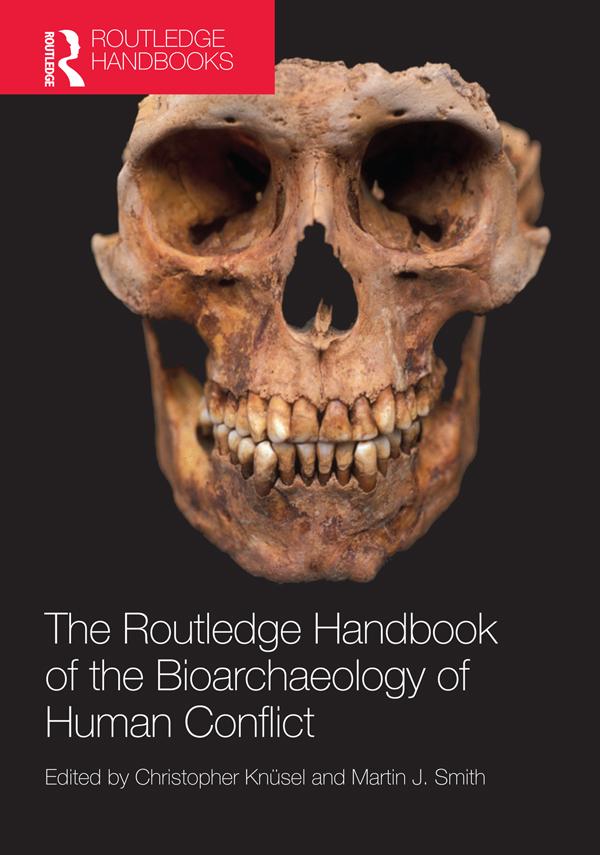
If human burials were our only window onto the past, what story would they tell? Skeletal injuries constitute the most direct and unambiguous evidence for violence in the past. Whereas weapons or defenses may simply be statements of prestige or status and written sources are characteristically biased and incomplete, human remains offer clear and unequivocal evidence of physical aggression reaching as far back as we have burials to examine.
Warfare is often described as ‘senseless’ and as having no place in society. Consequently, its place in social relations and societal change remains obscure. The studies in The Routledge Handbook of the Bioarchaeology of Human Conflict present an overview of the nature and development of human conflict from prehistory to recent times as evidenced by the remains of past people themselves in order to explore the social contexts in which such injuries were inflicted. A broadly chronological approach is taken from prehistory through to recent conflicts, however this book is not simply a catalogue of injuries illustrating weapon development or a narrative detailing ‘progress’ in warfare but rather provides a framework in which to explore both continuity and change based on a range of important themes which hold continuing relevance throughout human development.
Betaal eenvoudig met kaart, Klarna, Apple Pay of Google Pay. Niet tevreden? Je hebt altijd 14 dagen bedenktijd. Lees meer in onze voorwaarden. Heb je vragen, mail ons dan via hello@memmo.org.
Memmo maakt studeren makkelijker – waar je ook bent ter wereld. Wij brengen je cursusboeken en slimme studietools samen op één plek: samenvattingen, quizzen, podcasts en flashcards. En Ted, je studievriend die antwoord geeft op alles wat je je afvraagt. Meer dan 50.000 studenten studeren hier al – gebouwd om je sneller te laten leren en minder stress te geven.