
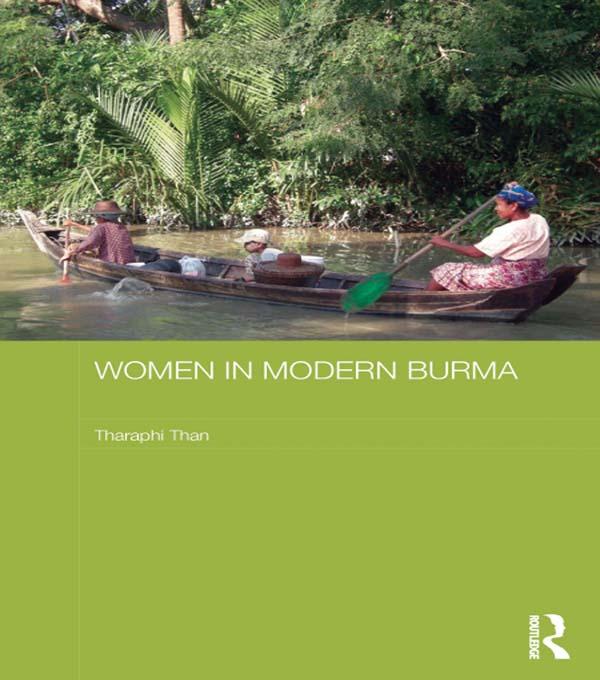
This book challenges the popular notion that Burmese women are powerful and are granted equal rights as men by society. Throughout history Burmese women have been represented as powerful and as having equal status to men by western travellers and scholars alike. National history about women also follows this conjecture. This book explains why actually very few powerful Burmese women exist, and how these few women help construct the notion of the high status of Burmese women, thereby inevitably silencing the majority of ‘unequal’ and disempowered women. One of the underlying questions throughout this book is why a few powerful women feel compelled to defend the notion that women hold privileged positions in Burmese society. Combining historical archives with statistical data published by UN agencies, this book highlights the reality of women’s status in modern Burma. Case studies include why the first Burmese women’s army was disbanded a few months after its establishment; how women writers assessed the conditions of Burmese women and represented their contemporaries in their works; the current state of prostitution; how modern-day sex-workers are trying to find their voice; and how women fared vis-à-vis men in education.
Betaal eenvoudig met kaart, Klarna, Apple Pay of Google Pay. Niet tevreden? Je hebt altijd 14 dagen bedenktijd. Lees meer in onze voorwaarden. Heb je vragen, mail ons dan via hello@memmo.org.
Memmo maakt studeren makkelijker – waar je ook bent ter wereld. Wij brengen je cursusboeken en slimme studietools samen op één plek: samenvattingen, quizzen, podcasts en flashcards. En Ted, je studievriend die antwoord geeft op alles wat je je afvraagt. Meer dan 50.000 studenten studeren hier al – gebouwd om je sneller te laten leren en minder stress te geven.