
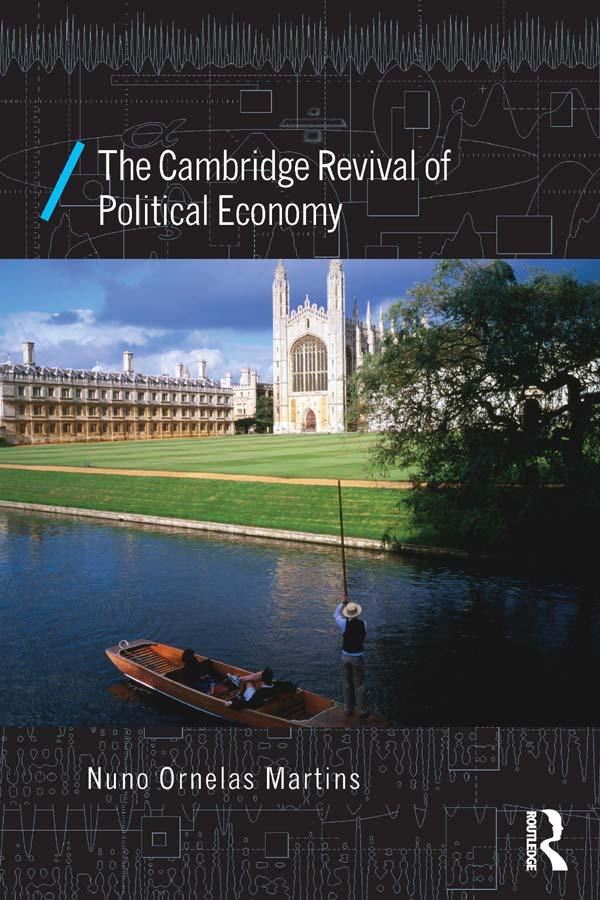
The marginalist revolution of the late nineteenth century consolidated what Karl Marx and Piero Sraffa called ‘vulgar economy’, bringing with it an emphasis on a scarcity theory that replaced the classical surplus theory. However, the classical political economy of Adam Smith and David Ricardo has been revived within the Cambridge economic tradition. This book looks at how different branches of the Cambridge economic tradition have focused on various aspects of this revival over time.
The author shows that classical political economy is distinct from vulgar political economy in terms of its economic, social, and ethical theory, with each difference resting on an issue of ontology. Structured in three parts, the book examines the central contested aspects of these theories, namely the nature of value, the relationship between human beings and social structure, and the nature of human wellbeing.
The Cambridge Revival of Political Economy will be relevant to students and researchers within the fields of political economy, history of economic thought, politics and philosophy.
Betaal eenvoudig met kaart, Klarna, Apple Pay of Google Pay. Niet tevreden? Je hebt altijd 14 dagen bedenktijd. Lees meer in onze voorwaarden. Heb je vragen, mail ons dan via hello@memmo.org.
Memmo maakt studeren makkelijker – waar je ook bent ter wereld. Wij brengen je cursusboeken en slimme studietools samen op één plek: samenvattingen, quizzen, podcasts en flashcards. En Ted, je studievriend die antwoord geeft op alles wat je je afvraagt. Meer dan 50.000 studenten studeren hier al – gebouwd om je sneller te laten leren en minder stress te geven.