
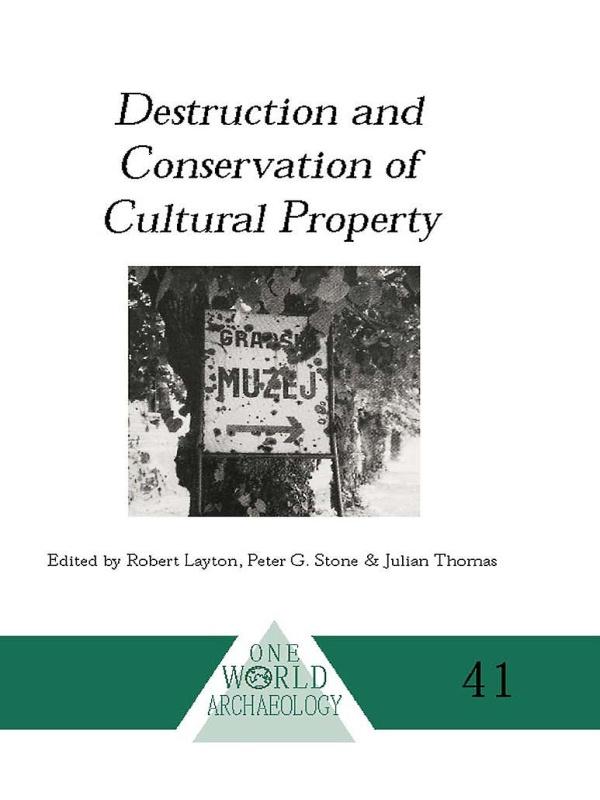
In 1991 the mosque at Ayodhya in India was demolished by Hindu fundamentalists who claim that it stood on the birthplace of a legendary Hindu hero. During recent conflicts in former Yugoslavia, ethnic groups destroyed mosques and churches to eliminate evidence of long-term settlement by other communities. Over successive centuries, however, a single building in Cordoba functioned as a mosque, a church and a synagogue. The Roman Emperor Diocletian's Palace in Split is occupied today by shops and residential apartments. What circumstances have lead to the survival and reinterpretation of some monuments, but the destruction of others?
This work asks whether the idea of world heritage is an essential mechanism for the protection of the world's cultural and natural heritage, or whether it subjugates a diversity of cultural traditions to specifically Western ideas. How far is it acceptable for one group of people to comment upon, or intercede in, the way in which another community treats the remains which it claims as its own? What are the responsibilities of multinational corporations and non-governmental organisations operating in the Developing World? Who actually owns the past: the landowner, indigenous people, the State or humankind?
Betaal eenvoudig met kaart, Klarna, Apple Pay of Google Pay. Niet tevreden? Je hebt altijd 14 dagen bedenktijd. Lees meer in onze voorwaarden. Heb je vragen, mail ons dan via hello@memmo.org.
Memmo maakt studeren makkelijker – waar je ook bent ter wereld. Wij brengen je cursusboeken en slimme studietools samen op één plek: samenvattingen, quizzen, podcasts en flashcards. En Ted, je studievriend die antwoord geeft op alles wat je je afvraagt. Meer dan 50.000 studenten studeren hier al – gebouwd om je sneller te laten leren en minder stress te geven.
Misschien vind je dit ook leuk
Koop het boek0