
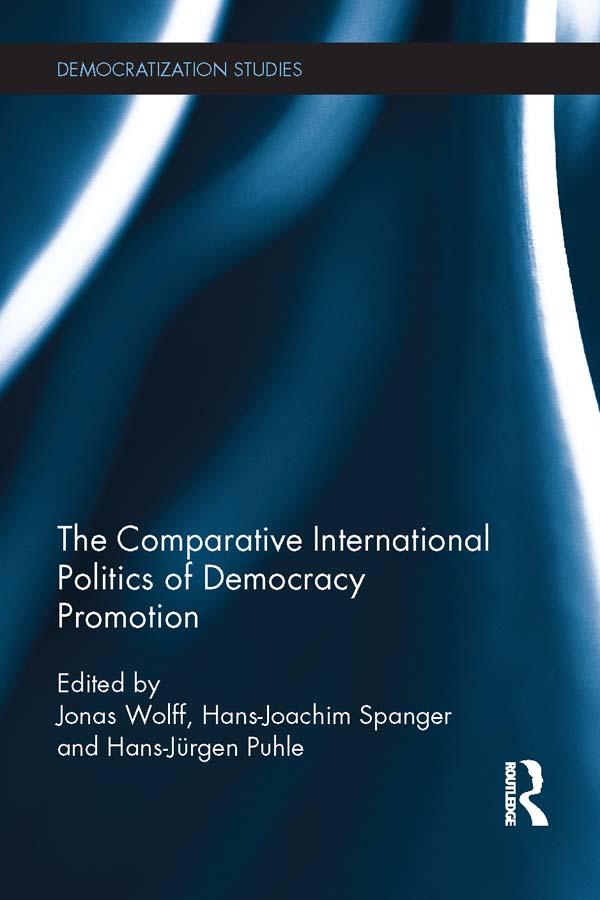
Though scholarly attention to democracy promotion is increasing, there is still little comparative and theoretically-based work on the protagonists of democracy promotion. This book investigates the motives that drive democracy promotion in a comparative and theoretically oriented manner, exploring how democracy promoters deal with conflicting objectives and the factors that shape their behaviour. It also addresses the more policy-oriented debate on the contemporary challenges to democracy promotion, focusing on US and German policies towards three kinds of challenges: the emergence of ‘radical’ leftist governments in Bolivia and Ecuador, the political rise of Islamist movements in Turkey and Pakistan, and the consolidation of (semi-)authoritarian rule in Belarus and Russia. In each case, North-Western democracy promoters have been confronted with serious conflicts of objectives between security, economic interests and democracy promotion. The analysis and comparison of such situations in which democracy promoters have to deal with competing objectives and make tough decisions provides powerful evidence as to the factors that shape democracy promotion.
The Comparative International Politics of Democracy Promotion will be of interest to students and scholars of international relations, comparative politics, democratization studies and foreign policy.
Betaal eenvoudig met kaart, Klarna, Apple Pay of Google Pay. Niet tevreden? Je hebt altijd 14 dagen bedenktijd. Lees meer in onze voorwaarden. Heb je vragen, mail ons dan via hello@memmo.org.
Memmo maakt studeren makkelijker – waar je ook bent ter wereld. Wij brengen je cursusboeken en slimme studietools samen op één plek: samenvattingen, quizzen, podcasts en flashcards. En Ted, je studievriend die antwoord geeft op alles wat je je afvraagt. Meer dan 50.000 studenten studeren hier al – gebouwd om je sneller te laten leren en minder stress te geven.