
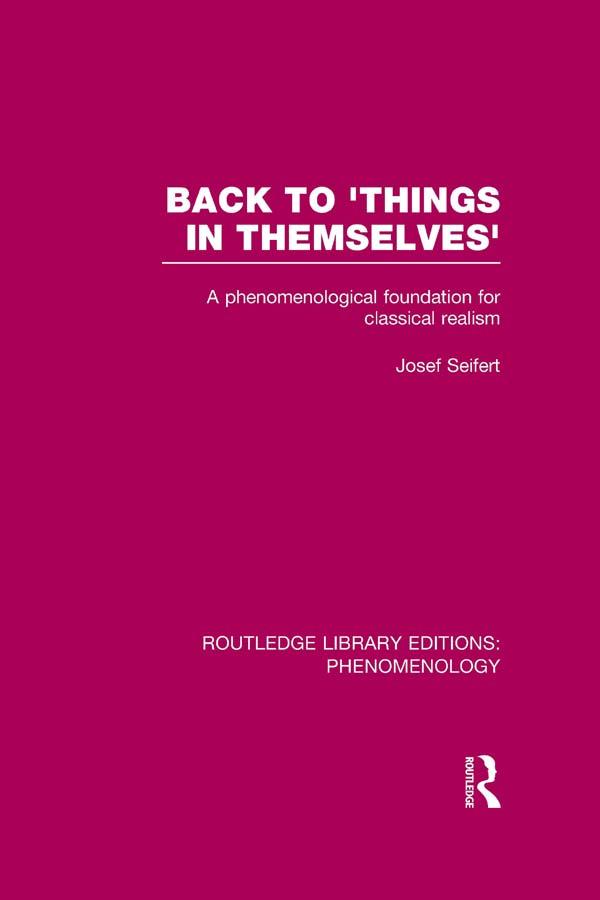
In an enlightening dialogue with Descartes, Kant, Husserl and Gadamer, Professor Seifert argues that the original inspiration of phenomenology was nothing other than the primordial insight of philosophy itself, the foundation of philosophia perennis. His radical rethinking of the phenomenological method results in a universal, objectivist philosophy in direct continuity with Plato, Aristotle and Augustine.
In order to validate the classical claim to know autonomous being, the author defends Husserl's methodological principle "Back to things themselves" from empiricist and idealist critics, including the later Husserl, and replies to the arguments of Kant which attempt to discredit the knowability of things in themselves.
Originally published in 1982, this book culminates in a phenomenological and critical unfolding of the Augustinian cogito, as giving access to immutable truth about necessary essences and the real existence of personal being.
Betaal eenvoudig met kaart, Klarna, Apple Pay of Google Pay. Niet tevreden? Je hebt altijd 14 dagen bedenktijd. Lees meer in onze voorwaarden. Heb je vragen, mail ons dan via hello@memmo.org.
Memmo maakt studeren makkelijker – waar je ook bent ter wereld. Wij brengen je cursusboeken en slimme studietools samen op één plek: samenvattingen, quizzen, podcasts en flashcards. En Ted, je studievriend die antwoord geeft op alles wat je je afvraagt. Meer dan 50.000 studenten studeren hier al – gebouwd om je sneller te laten leren en minder stress te geven.