
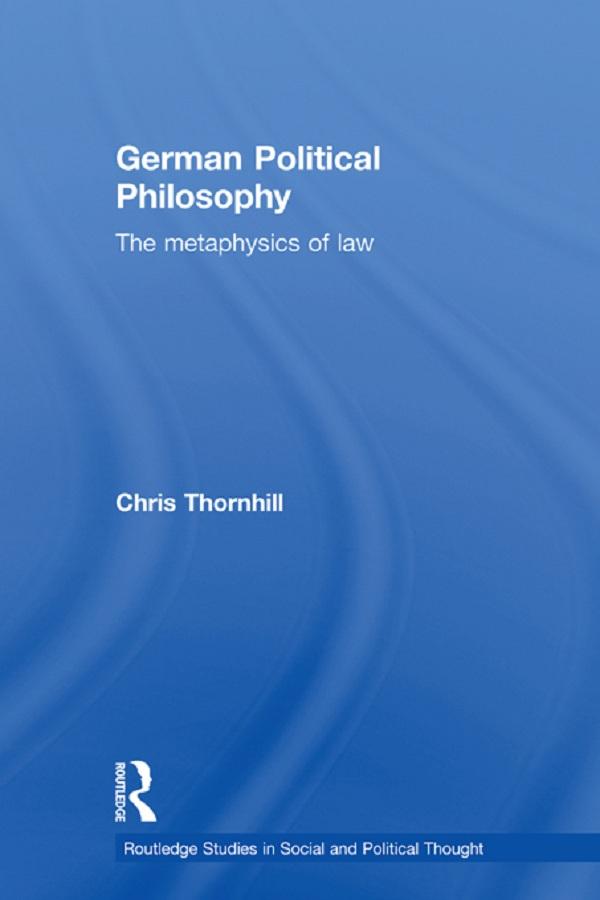
This book combines philosophical, intellectual-historical and political-theoretical methodologies to provide a new synoptic reading of the history of German political philosophy. Incorporating chapters on the political ideas of Luther and Zwingli, on the politics of the early Enlightenment, on Idealism, on Historicism and Lukács, on early Twentieth-Century political theology, on the Frankfurt School, and on Habermas and Luhmann, the book sets out both a broad and a detailed discussion of German political reflection from the Reformation to the present. In doing so, it explains how the development of German political philosophy is marked by a continual concern with certain unresolved and recurrent problems. It claims that all the major positions address questions relating to the origin of law, that all seek to account for the relation between legal validity and metaphysical and theological superstructures, and that all are centred on the attempt to conceptualise and reconstruct the character of the legal subject.
Betaal eenvoudig met kaart, Klarna, Apple Pay of Google Pay. Niet tevreden? Je hebt altijd 14 dagen bedenktijd. Lees meer in onze voorwaarden. Heb je vragen, mail ons dan via hello@memmo.org.
Memmo maakt studeren makkelijker – waar je ook bent ter wereld. Wij brengen je cursusboeken en slimme studietools samen op één plek: samenvattingen, quizzen, podcasts en flashcards. En Ted, je studievriend die antwoord geeft op alles wat je je afvraagt. Meer dan 50.000 studenten studeren hier al – gebouwd om je sneller te laten leren en minder stress te geven.
Misschien vind je dit ook leuk
Koop het boek0